Anxiety in Teens and Women: Signs, Causes and What Helps
A plain-language guide for teen girls, women and parents on what anxiety is, how it shows up and what helps.
By the ThisWayUp editorial team. Published November 4, 2026

A plain-language guide for teen girls, women and parents on what anxiety is, how it shows up and what helps.
By the ThisWayUp editorial team. Published November 4, 2026


Anxiety in teens and women is common, real and treatable. It becomes more than everyday worry when fear sticks around and gets in the way of school, work, sleep or friendships. Girls and women are more likely than boys and men to have an anxiety disorder, and support, skills and therapy all help.
ThisWayUp is a free mental health resource for women and teen girls. This guide pairs what national health sources say about anxiety with what the experts in our expert video library have shared, so you can find a next step that fits your life.
In this guide
Anxiety is your body and mind's alarm system. A racing heart before a test, a knot in your stomach before a hard conversation, a restless night before a big day: these are normal reactions to stress, and they usually fade once the moment passes.
Anxiety becomes a problem when the alarm keeps ringing after the danger is gone, or rings when there's no danger at all. For generalized anxiety disorder (GAD), the National Institute of Mental Health describes worry that is hard to control on most days for at least six months, along with symptoms such as feeling restless or on edge, fatigue, trouble concentrating, irritability, muscle tension and sleep problems (NIMH).
GAD is one of several anxiety disorders. Others include panic disorder, social anxiety disorder and phobia-related disorders. Only a doctor or mental health professional can diagnose an anxiety disorder, but you don't need a diagnosis to take your anxiety seriously. If you want a private check-in on how you're doing right now, ThisWayUp's free mental health assessment is a good place to start.
If you're living with anxiety, you are far from alone. National surveys from the early 2000s, reported by NIMH, estimate that 31.9% of US adolescents ages 13 to 18 have had an anxiety disorder at some point, with a higher rate for girls (38.0%) than boys (26.1%). Among US adults, an estimated 19.1% had an anxiety disorder in the past year, again higher for women (23.4%) than men (14.3%) (NIMH).
The gender gap goes beyond how many people are affected. A large US study of more than 20,000 adults found that women had higher rates of every anxiety disorder examined except social anxiety disorder, were more likely to also be diagnosed with depression, and carried a heavier burden of illness than men with anxiety (McLean et al., Journal of Psychiatric Research).
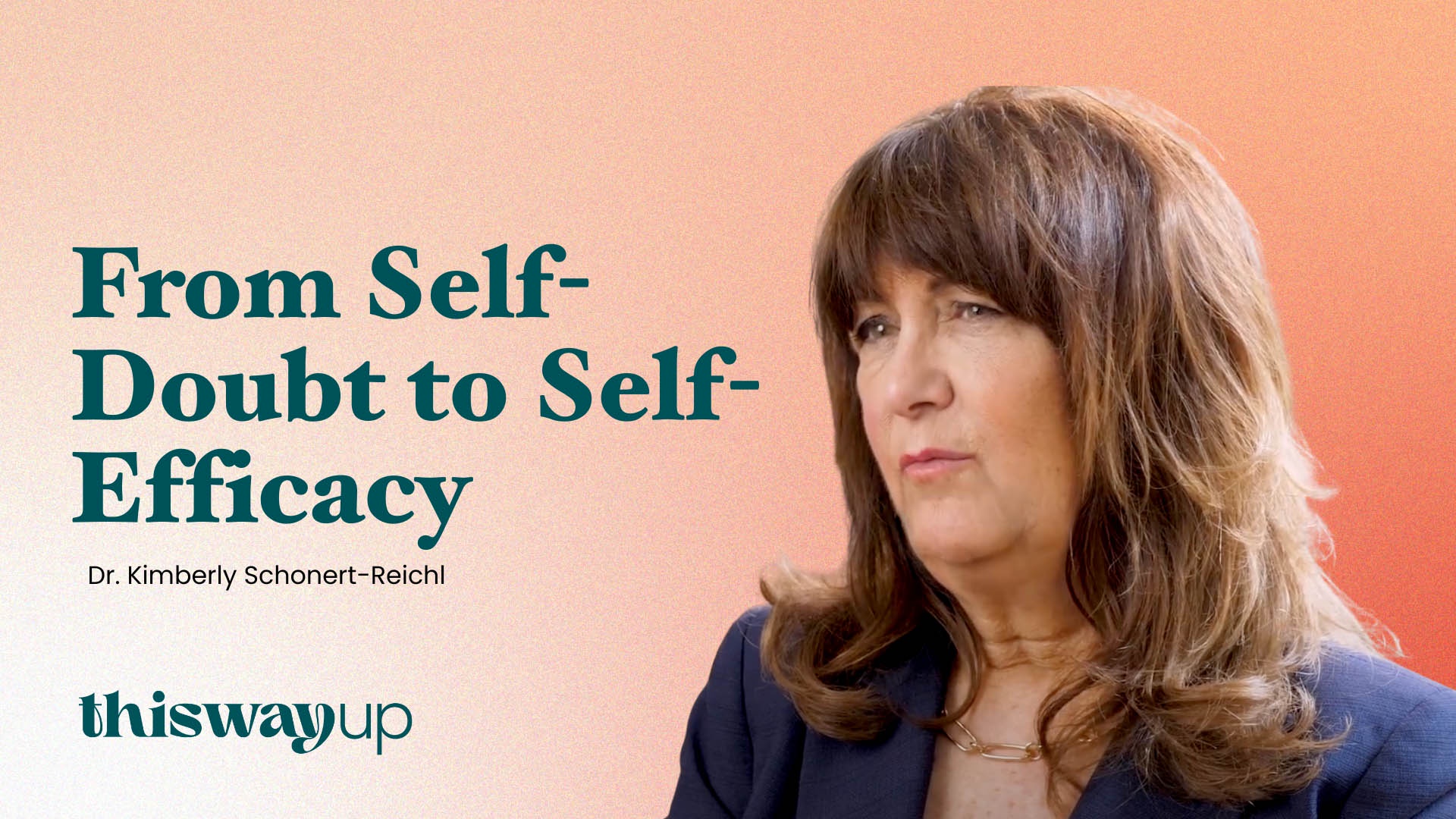
Experts on ThisWayUp see the same pattern in young people. Dr. Kimberly Schonert-Reichl, a professor in the Department of Psychology at the University of Illinois at Chicago who researches social and emotional learning, puts it plainly:
"Over the last decade, we've seen really increasing rates of mental illness in our children and our teens, particularly depression and anxiety. These were increasing even before COVID happened." Dr. Kimberly Schonert-Reichl, in Act Now: Youth Mental Illness Needs Attention
Anxiety in teens can be easy to miss because it often looks like something else: a bad mood, a stomach bug or "just being a teenager." NIMH notes that children and teens with GAD worry about many of the same things adults do, but their worries often center on school, extracurricular activities, friendships and the future. They may struggle with uncertainty, fear of making mistakes or worry about disappointing others, and some strive for perfection as a way to manage anxiety (NIMH).
Common signs of anxiety in teens include:
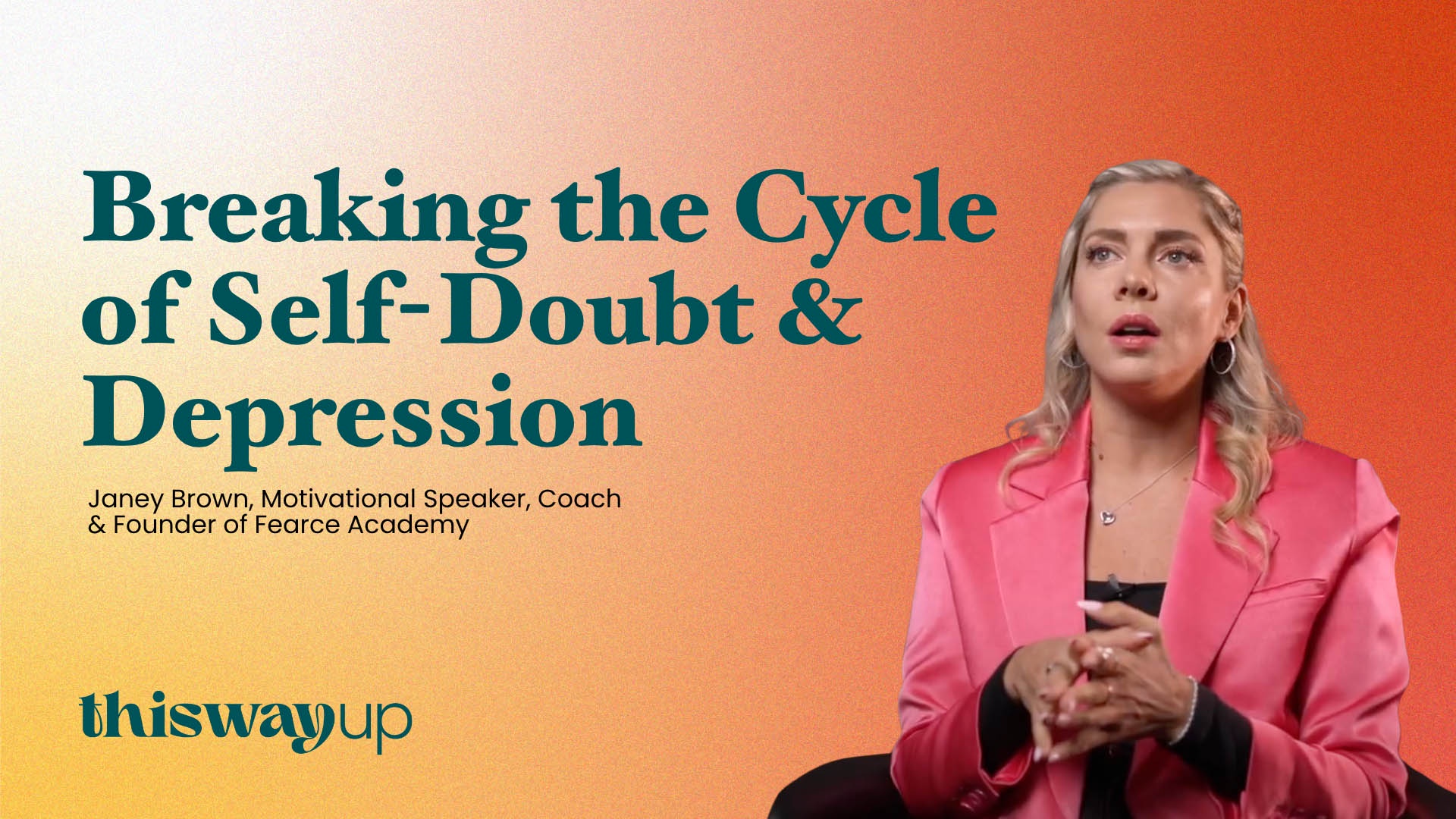
Everyone has some of these sometimes. What matters is how long they last, how intense they feel and whether they get in the way of daily life. If you're a teen and this sounds like you, telling one trusted adult is a strong first step. ThisWayUp's video How Teen Girls Can Build Emotional Strength and Set Boundaries has ideas from mental resilience coach Janey Brown.
There's no single cause of anxiety. Researchers think anxiety disorders come from a combination of factors, including genetics, traumatic events and hormonal changes (Office on Women's Health). For teen girls in particular, the experts in ThisWayUp's video library point to two everyday patterns that can quietly turn worry up: the way friends talk through problems, and life on social media.
Talking to friends is usually a good thing. But researchers have described a pattern called co-rumination: going over the same problems again and again with a friend, speculating about them and focusing on the bad feelings. In a study of third, fifth, seventh and ninth graders, co-rumination was linked to closer friendships but also to more symptoms of depression and anxiety, and girls reported doing it more than boys (Rose, Child Development).
Dr. Schonert-Reichl explains why that loop matters for teen girls:
"I think of rumination as kind of like a vinyl record caught in the groove where you kind of over and over do it. And so you need to have strategies to get out of that. And sometimes being around a group of friends who have those same problems might not be the best strategy." Dr. Kimberly Schonert-Reichl, in What Is Corumination? How Girls Handle Stress
She also points out that "stress is contagious," so spending a lot of time around very stressed people can raise your own stress. The answer isn't to stop confiding in friends. It's to notice when a conversation keeps circling the same fear and to balance it with other perspectives and other people, like a parent, coach, school counselor or therapist. For more on breaking the loop, read ThisWayUp's article on why rumination makes anxiety, depression and stress worse.
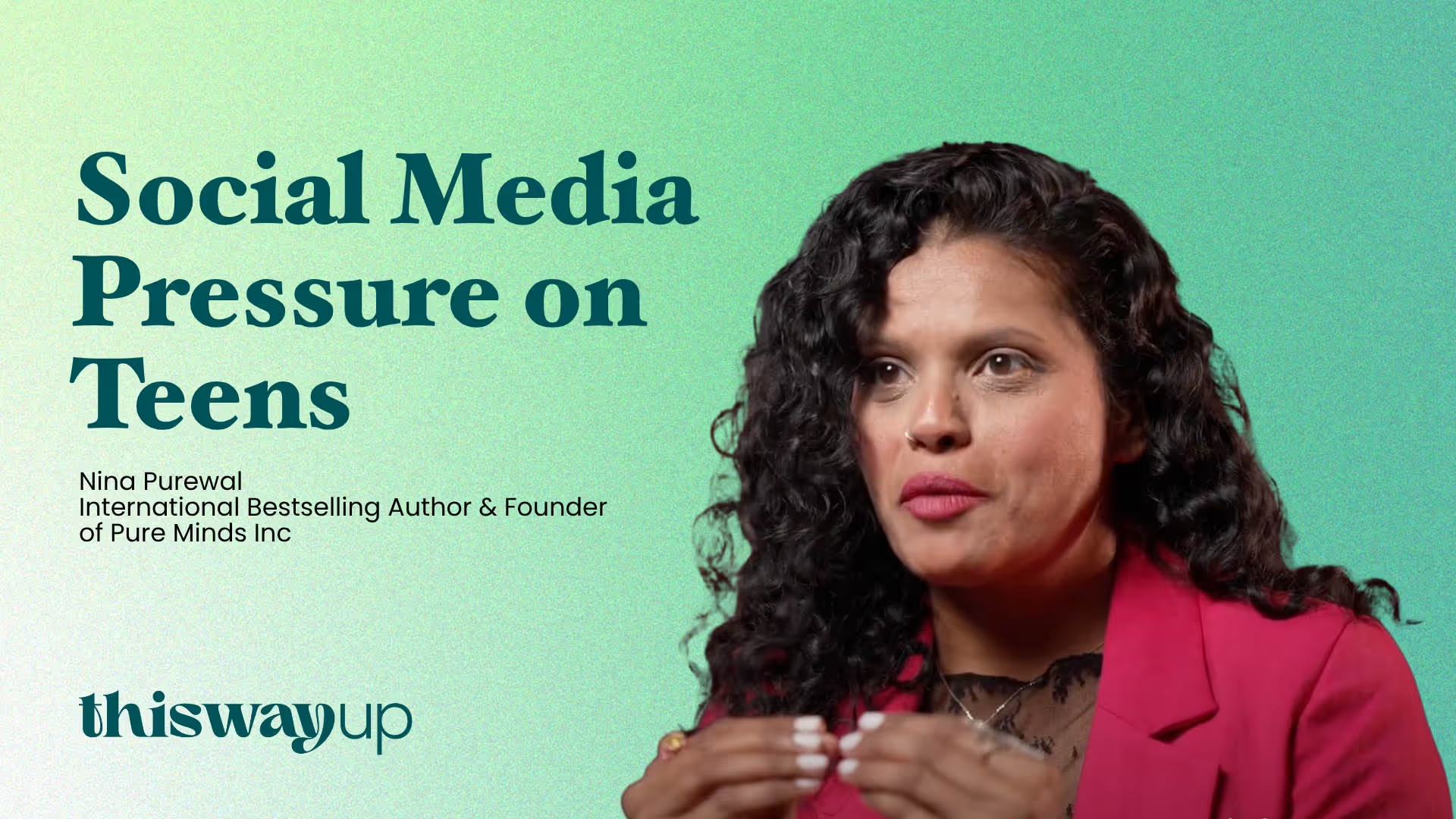
Nina Purewal, a mindfulness educator and co-author of the bestseller Let That Sh*t Go, says the pressure young people feel online is intense. She recalls someone telling her:
"When we were young, bullying happened from 9 to 3. And now it's 24/7." Nina Purewal, in Social Media Pressure on Teens: Anxiety and Authenticity
She adds that feeds show "everyone's highlight reel" and "nobody's posting the breakdowns," which leaves a developing brain comparing itself to a standard no one actually lives. Her advice for parents is to learn the apps your kids use, know who they're interacting with and create real boundaries. ThisWayUp's guide to setting digital boundaries that actually reduce stress is a practical place to start, and Janey Brown's Blocking Out the Noise: Finding Yourself Beyond Social Media speaks directly to teens.
Anxiety in women shares the same core symptoms as anxiety in anyone: persistent worry, restlessness, tension, poor sleep and trouble concentrating. What often differs is the context: many women carry anxiety alongside caregiving, work and the mental load of a household, and write it off as "just stress."
Hormones are part of the picture. The US Office on Women's Health lists hormonal changes during the menstrual cycle among the factors researchers think may contribute to anxiety disorders, along with genetics and traumatic events (Office on Women's Health). Dr. Brenda Chau, who earned her medical degree in Peru and works in Toronto using a functional medicine approach, describes in her video How Chronic Stress Affects Your Hormones and Mental Health how estrogen and progesterone shift through puberty, pregnancy, postpartum and the years around menopause, and how stress and hormones affect each other.
If your anxiety seems to rise and fall with your cycle, shows up after having a baby or changes in the years before menopause, it's worth tracking and raising with your doctor. If you're pregnant or planning a pregnancy and take medicine for anxiety, don't stop or change it on your own. Talk to your doctor, since the Office on Women's Health notes some anxiety medicines can affect an unborn baby. ThisWayUp's guide to women's mental health covers these life stages in more depth.
"Panic attack" is a medical term. "Anxiety attack" is an everyday phrase people use for a stretch of intense anxiety that often builds around a specific worry, like an exam, an argument or a deadline.
According to NIMH, physical symptoms of a panic attack can include a pounding or racing heart, sweating, chills, trembling, difficulty breathing, weakness or dizziness, tingly or numb hands, chest pain and stomach pain or nausea. A panic attack can last from a few minutes to an hour or sometimes longer, can happen even during sleep and can feel like a heart attack. Panic attacks themselves are not life-threatening, and one panic attack is not a mental disorder (NIMH).
If you have chest pain or trouble breathing and aren't sure what's happening, get medical help right away. Once a doctor has ruled out other causes, a practice like ThisWayUp's 5-minute deep breathing exercises to calm your nervous system is something you can rehearse for those moments.
NIMH notes that stress management techniques such as exercise, mindfulness and meditation can reduce anxiety symptoms and enhance the effects of therapy, and that habits like reducing caffeine and getting enough sleep can help when paired with standard care (NIMH). Here's how ThisWayUp's experts put those ideas into practice.
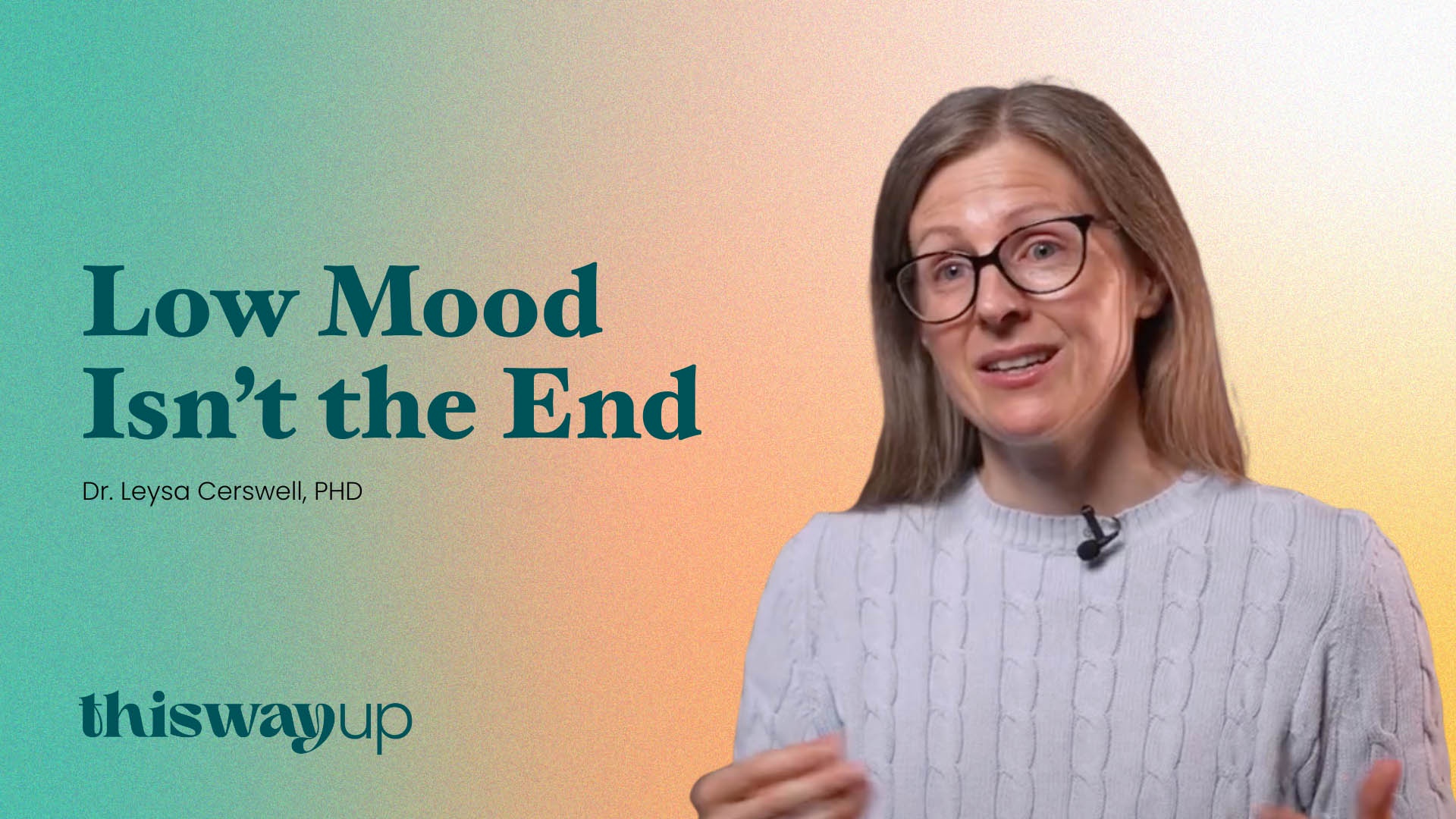
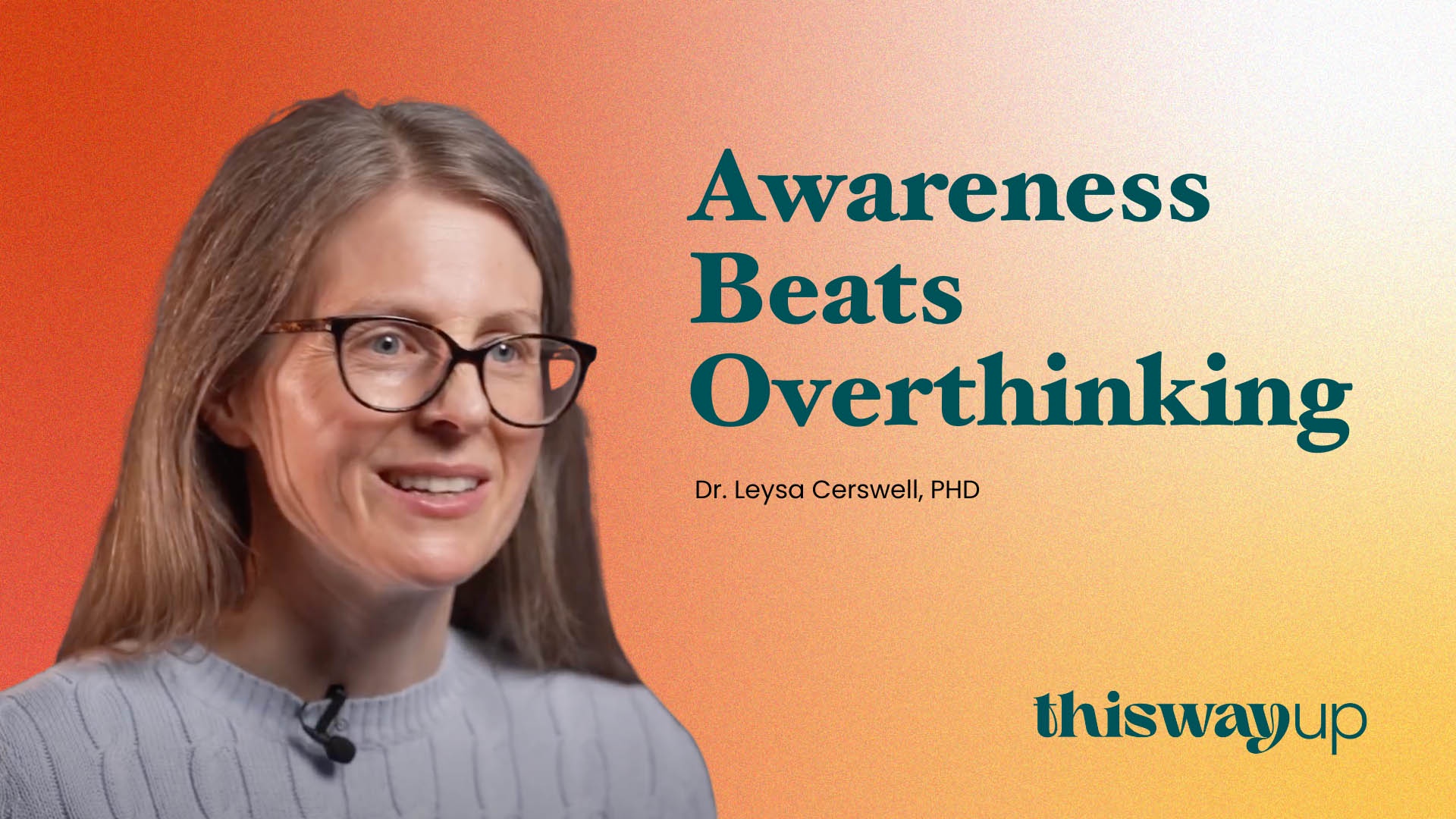
Breathing gives your attention somewhere steady to land. Dr. Leysa Cerswell, who holds a doctorate in clinical psychology and is on the faculty at the Centre for Mindfulness Studies, reminds you in her guided practice that a wandering mind isn't failure:
"Naturally you may notice your mind gets pulled into thinking or planning. This is perfectly okay. It's just what our minds do." Dr. Leysa Cerswell, in Ground Yourself with Breath: A Simple Practice
When you have a few more minutes, try ThisWayUp's 5-minute mindful grounding exercises.
Andie Kalifer, a holistic nutritionist and certified nutritional practitioner, recommends low-impact movement for people who feel stuck in overdrive. She says "a lot of us are stuck in this fight or flight," and that "breath work and meditation and yoga really helps us kind of switch nervous systems and just unwind." Watch her full clip, Move to Feel Better: Exercise for Mental Health.
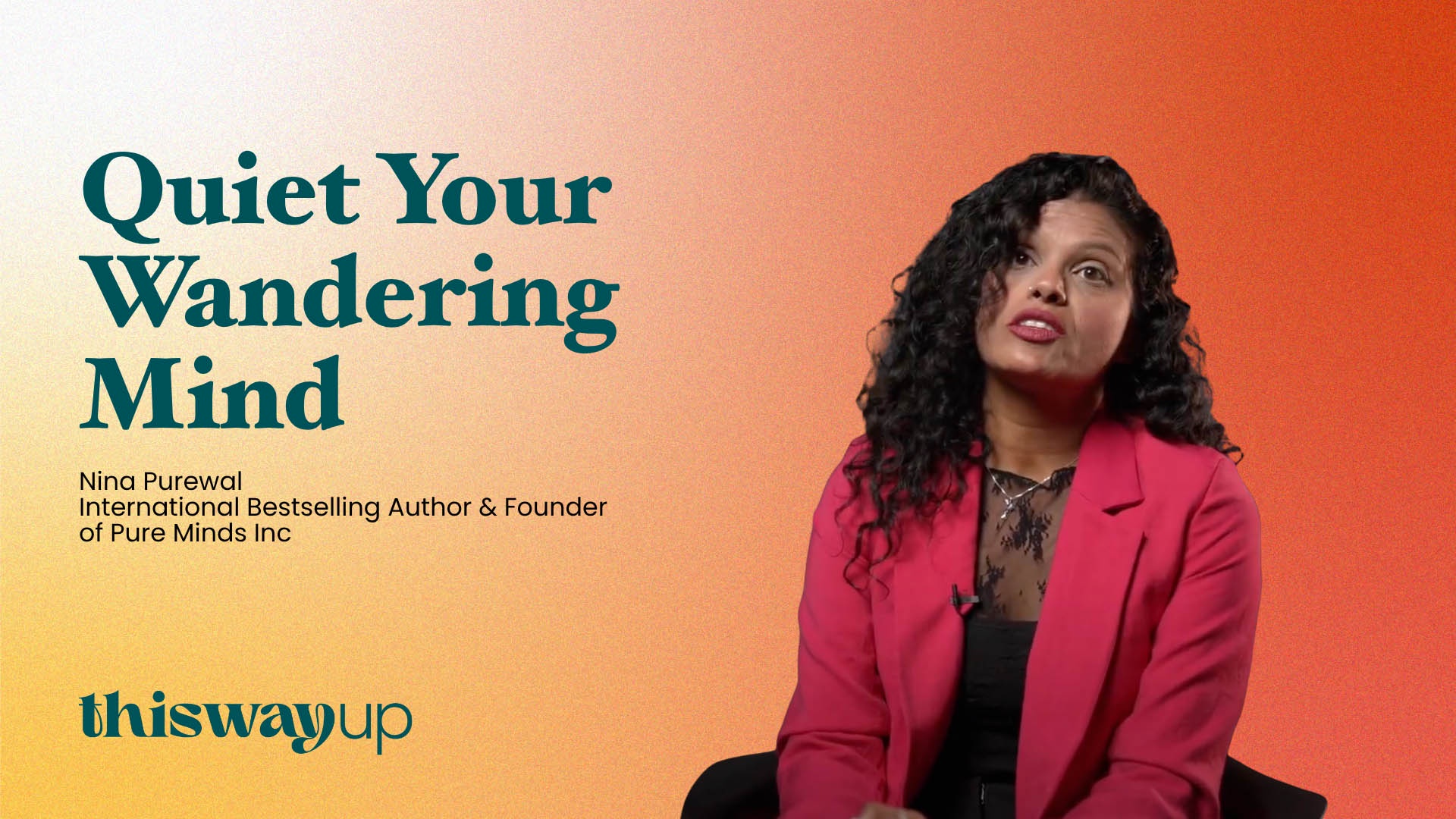
Nina Purewal teaches the difference between the "chatty mind" and the "observing mind," the part of you that can notice a worry without being swept away by it:
"When we struggle with anxiety or some depressive thoughts, we think we are our thoughts. But we're so much more than our thoughts." Nina Purewal, in Quiet Your Wandering Mind: Understanding Rumination
Naming a worry ("there's that what-if again") creates a little space between you and it. Dr. Cerswell adds that attention is a skill you can build: "As kids, we're told to pay attention. We're never taught how to pay attention." ThisWayUp also explains how overthinking makes anxiety and stress worse.
A steady wind-down routine is worth protecting. Read how sleep affects stress and emotional recovery, and build a small personal calm kit (a favorite playlist, a breathing card, something soft to hold) to keep within reach when worry spikes.
If you're the parent of an anxious teen, your instinct may be to fix the problem fast. Dr. Schonert-Reichl says the research points somewhere simpler:
"They really need someone just to listen to them, not exactly give advice. That sometimes just being a sounding board and acknowledging that they are suffering is sufficient." Dr. Kimberly Schonert-Reichl, in How to Support Someone Who Opens Up
Your own calm matters too. Dr. Jody Carrington, a best-selling author and host of the UNLONELY podcast, talks about co-regulation: the way a settled adult helps a young person settle. She notes most of us are better with other people's children because we're regulated, and that "we haven't lost our ability to be great. We've lost access to it." Watch It Takes a Village: Why Co-Regulation Actually Works.
A few ways ThisWayUp suggests parents can start:
For parents of girls, ThisWayUp's article on supporting daughters through anxiety goes deeper.
Reach out to a doctor or mental health professional if anxiety lasts for weeks, keeps getting worse or gets in the way of school, work, sleep, relationships or things you used to enjoy. You don't have to wait until it's severe.
Anxiety disorders are treatable. NIMH describes cognitive behavioral therapy (CBT) as the "gold standard" psychotherapy for GAD: it helps people become aware of automatic thoughts that are inaccurate or harmful, question them and change self-defeating patterns. Acceptance and commitment therapy (ACT) is another option that uses mindfulness and goal setting. Therapy can work in person or by telehealth (NIMH).
Medication helps some people too. A health care provider may prescribe it, and NIMH notes some anxiety medicines take several weeks to start working and can have side effects. Never start, stop or change a medication on your own; talk with your prescriber first. For teens, a pediatrician or family doctor is a good first stop.
Speaking up is the hardest part for many people. Dr. Chau puts it this way:
"I want people with major depressive disorders or generalized anxiety disorder to be able to speak up to their problems, to feel comfortable with someone, to find a good support group." Dr. Brenda Chau, in Speak Up, Get Support: Your Voice Matters
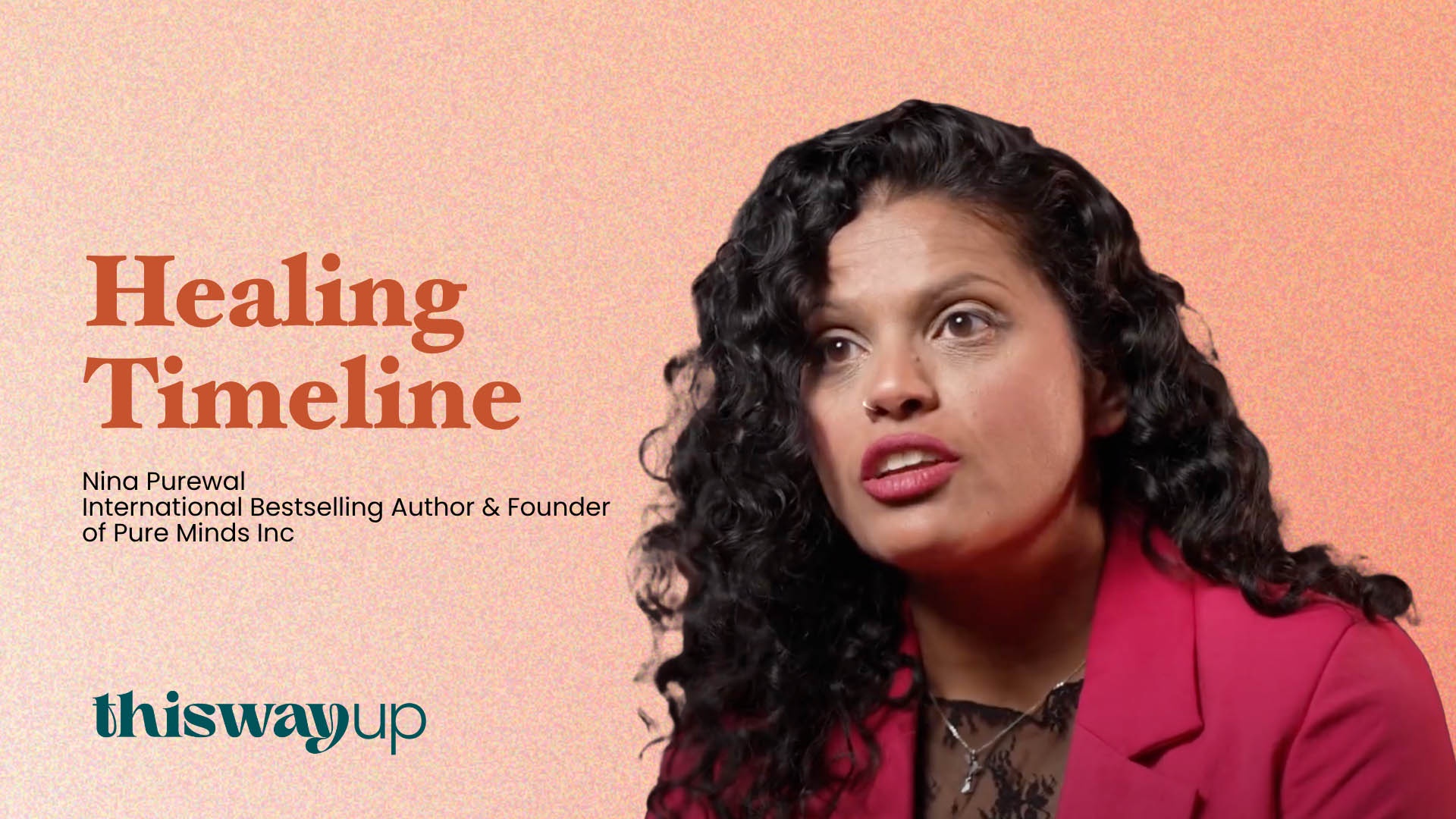
Not sure what kind of support fits? Nina Purewal walks through it in Chronic Stress and Anxiety: Finding the Right Support. You can also browse ThisWayUp's free mental health tools for women and teens or read real stories in our community.
Anxiety is worry, tension and dread that can build slowly and linger, often around a specific concern. Panic is a sudden surge of intense fear with strong physical symptoms such as a racing heart, trembling or trouble breathing. According to NIMH, a panic attack can last from a few minutes to an hour or sometimes longer, and it is not life-threatening.
The 3-3-3 rule is a simple grounding exercise often shared with kids, teens and adults: name three things you can see, three sounds you can hear, then move three parts of your body. It isn't a treatment, but it can pull attention out of a worry spiral and back to the present. ThisWayUp's mindful grounding exercises offer more ideas.
Researchers think anxiety disorders come from a mix of factors, including genetics, traumatic events and, for women, hormonal changes during the menstrual cycle, according to the Office on Women's Health. NIMH notes GAD symptoms are often worse during stressful times such as illness, exams or family and relationship conflict. Tracking when your anxiety spikes can help you and a professional spot patterns.
Acceptance means noticing anxiety without judging yourself for it or trying to force it away. It's the idea behind acceptance and commitment therapy (ACT), which NIMH describes as encouraging nonjudgmental acceptance of thoughts and engagement in meaningful activities. Mindfulness, like returning to your breath or naming a thought as "just a thought," is a gentle way to practice.
Skills that help many people include slow breathing, grounding, movement, mindfulness, journaling, steady sleep, cutting back on caffeine and staying connected to people you trust. NIMH notes that exercise, mindfulness and meditation can reduce anxiety symptoms alongside therapy. If anxiety and depression are both weighing on you, talk with a doctor or therapist about a plan that covers both.
ThisWayUp is an educational resource, not a medical provider. This guide doesn't replace advice from a doctor or mental health professional.
Related guides: Depression in women and teens, Women's mental health, How to heal from trauma and How to recover from burnout.