How to Heal From Trauma: A Gentle Guide for Women and Teens
A gentle guide for women, teen girls and parents on how trauma affects the body and mind and how healing happens.
By the ThisWayUp editorial team. Published November 4, 2026

A gentle guide for women, teen girls and parents on how trauma affects the body and mind and how healing happens.
By the ThisWayUp editorial team. Published November 4, 2026


How to heal from trauma: there's no single path, but many trauma specialists work in three broad phases. First you rebuild a sense of safety in your body and your days. Then you slowly make sense of what happened, with support. Then you reconnect with people and the life you want. Healing is not about forgetting. It is about the past no longer running your present.
If you are in danger or thinking about hurting yourself, call or text 988 now, or call 911. You can also text HOME to 741741 at any time.
This guide is for women, teen girls and the parents who love them. It brings together trusted research and the voices of experts from the ThisWayUp video library, including author and speaker Dr. Jody Carrington, mental resilience coach Janey Brown and mindfulness educator Nina Purewal. ThisWayUp is a free mental health resource, not a medical provider, so use this guide as a starting point and talk to a doctor or therapist about your own situation.
In this guide:
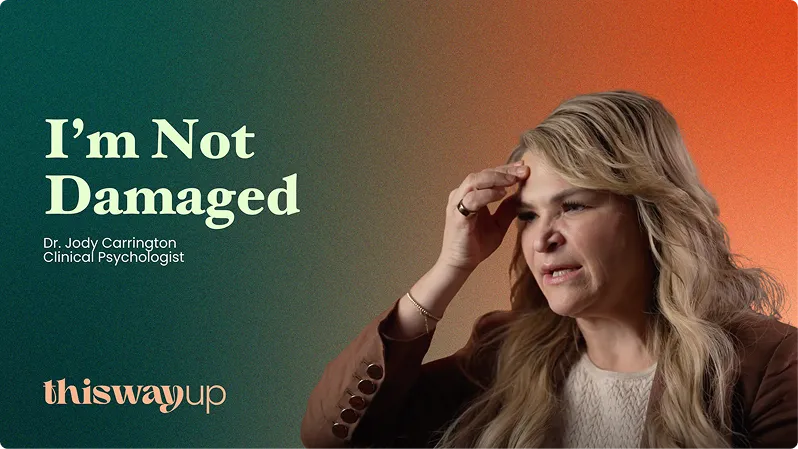
Trauma is what can happen inside you after something frightening, overwhelming or harmful, such as an accident, a sudden loss, violence, abuse or a long stretch of not feeling safe. Dr. Jody Carrington keeps the definition simple: "trauma for me is defined as anything encoded in terror." By that measure, she says, "all of us at some point in our life will experience trauma to some degree" (How the Body Encodes Trauma).
Feeling shaken after a traumatic event is normal. The National Institute of Mental Health says people may feel anxious, sad or angry, have trouble concentrating and sleeping, or keep thinking about what happened, and that most people recover from these symptoms as their reactions lessen over time (National Institute of Mental Health). When symptoms don't improve, or start to get in the way of daily life, NIMH says it is important to seek professional help.
So what does healing from trauma actually mean? It does not mean erasing the memory or pretending it didn't matter. Carrington describes the goal as learning "to integrate your experiences rather than just get over them." In plain terms, the memory becomes something that happened to you, not something that is still happening to you. You can find more expert explanations like this one in the ThisWayUp video library.
When you are in danger, the brain's alarm system takes over so you can survive. Dr. Jody Carrington explains this with a hand model of the brain: the deeper, older part of the brain holds "fight, flight and freeze," while the thinking part works like a lid on top. In real danger, she says, you want that lid to flip. "Your body does that automatically. It does that to keep you safe" (After the Terror Passes).
The harder part of trauma often comes later. "The question with trauma is what happens after the initial sort of terror inducing experience is over," Carrington says. Drawing on Gabor Maté's work, she adds: "It's not what happens to you. It's what happens inside of you as a result of what happens to you." Some people, especially those who have gone a long time without feeling safe, "get stuck at the scene" (When We Get Stuck in Trauma). Their body keeps bracing for danger, living "with our shoulders up," even when the danger is over.
That braced state has a name in the research. NIMH lists arousal and reactivity symptoms of PTSD that include being easily startled, feeling tense or on edge, having trouble concentrating, having difficulty sleeping, and feeling irritable or having angry outbursts (NIMH). PTSD is a real, diagnosable condition, and treatment helps. Having these reactions does not mean you are broken.
Trauma is more common in young lives than many adults realize. The CDC defines adverse childhood experiences (ACEs) as potentially traumatic events in childhood, such as experiencing violence, abuse or neglect, or witnessing violence at home or in the community. The CDC reports that ACEs are common: three in four high school students reported experiencing one or more (CDC). NIMH reports that about 6 of every 100 people will experience PTSD at some point in their lives, and that women are more likely than men to develop it (NIMH).
For teens, trauma does not always look like sadness. NIMH says older children and teens usually show symptoms more like those seen in adults, and they may also become disruptive, disrespectful or destructive, or feel guilt over not preventing injury or death. A teen who suddenly seems "difficult" may be a teen who does not feel safe.
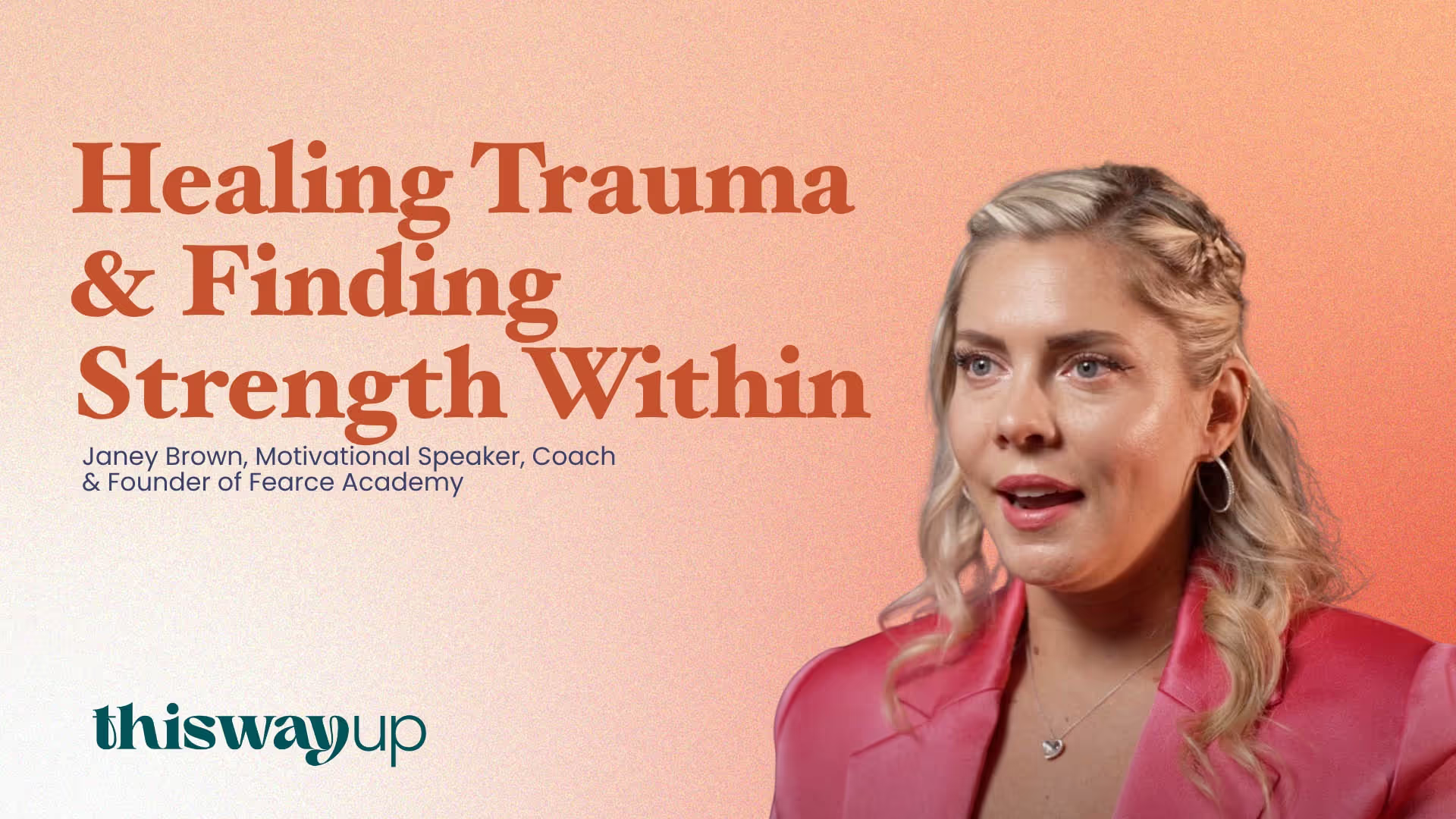
Many people don't recognize their own trauma at first. Mental resilience coach Janey Brown, founder of Fearce Academy, describes her childhood this way: "at the time when it's happening to you, you don't know that it's trauma. You just sort of think it's normal." She warns that "not paying attention to that and not coming to terms with that will catch up with you over time" (Healing Trauma & Finding Strength Within). For Janey, it later showed up physically, too, as she shares in The Holistic Way to Heal Trauma, Identity & Expression.
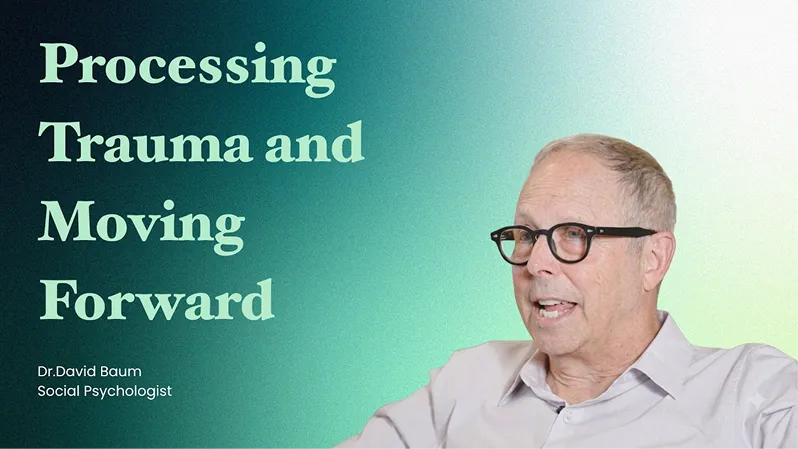
Patterns of emotional overwhelm often trace back to whether early relationships felt safe. David Baum, a social psychologist and facilitator, covers this idea in Why Childhood Wounds Shape Us. If you are a mom carrying your own history while raising kids, the parent section below is for you, and so is our guide to mental wellbeing for mothers.
There is no single official list of trauma healing stages, and articles online count anywhere from three to seven. What is clear is that many trauma specialists work in phases. In a 2011 survey of 50 trauma experts run by the International Society for Traumatic Stress Studies, 84% endorsed a phase-based or sequenced approach as the most appropriate treatment for complex PTSD, with help tailored to each person's symptoms (Cloitre et al., Journal of Traumatic Stress). The first-line tools those experts named included emotion regulation strategies, telling the story of the trauma memory, changing unhelpful thoughts, stress management and relationship skills.
In everyday language, the phases of trauma recovery often look like this:
Trauma healing rarely moves in a straight line. You might feel steady for months, then have a hard week around an anniversary or a reminder. That is not failure. Safety stays the foundation the whole way through. As Carrington puts it (the prefrontal cortex is the thinking part of the brain), the work is to "create that sense of safety so that the prefrontal cortex can come back on and we can start to integrate the experience" (emotional safety).
Professional care matters, and so do the ordinary things you do every day. NIMH suggests these healthy ways to cope after a traumatic event (NIMH):
Here is how ThisWayUp's free tools fit those steps:
One caution: if any exercise brings up flashbacks or starts to feel overwhelming, stop, and reach out to someone you trust or a professional. Going slowly is part of healing from trauma, not a setback.
Much trauma happens between people, and much healing does too. "Relationship is the thing that can hurt us the most," Dr. Jody Carrington says. "It's also the thing that's required to heal us" (Why It Goes Back to Childhood). The research points the same way. NIMH lists seeking out and receiving support from friends, family or support groups as a resilience factor that may reduce the likelihood of developing PTSD (NIMH).
Support works best when it shows rather than tells. "What we don't need in times of distress is somebody to tell us what to do. We need somebody to show us," Carrington says (Regulation Is in Our Bones). That is the idea behind co-regulation: a calm person helps a stressed nervous system settle. It is also why safe communities and peer support can make such a difference.
Telling your story can be part of healing, but only on your terms. Carrington's filter is "making sure that it's safe enough to do that, that it's your story to tell," since stories of hurt often involve other people (Tell It When It's Safe). You never owe anyone the details of what happened to you.
If trauma symptoms stick around, therapy can help. NIMH says it is important for people with PTSD symptoms to work with a mental health professional who has experience treating PTSD, and that the main treatments are psychotherapy, medications, or both.
The American Psychological Association's clinical practice guideline for PTSD recommends three first-line therapies, all forms of cognitive behavioral therapy (American Psychological Association):
The APA guideline also suggests cognitive therapy, EMDR (eye movement desensitization and reprocessing) and narrative exposure therapy. These have evidence behind them but received a conditional recommendation. Some medications are also used for PTSD. Any decision about starting, stopping or changing a medication belongs with a prescriber who knows your history.
Two more things are worth knowing. If you are living through ongoing trauma, such as an abusive relationship, NIMH says treatment usually works best when it addresses both the traumatic situation and the symptoms. And look for care that asks "what happened to you?" instead of "what's wrong with you?" Carrington describes that shift in her video on trauma-informed care. If you don't know where to start, NIMH suggests talking to a primary care provider, who can refer you to a qualified mental health professional. ThisWayUp's free resources and free mental health assessment can help you put words to what you are feeling before that appointment.
Parents and caregivers matter more than they may think. NIMH says how adults respond to trauma can strongly influence how children and adolescents react, and that caregivers who support their own ability to cope can provide better care for others (NIMH). Dr. Jody Carrington says it in her own words: "If the big people aren't okay, the little people don't stand a chance" (Small Shifts Big Calm).
NIMH's suggestions for helping children and teens after trauma include:
NIMH advises contacting a health care provider if new problems develop, especially if symptoms such as flashbacks, a racing heart and sweating, being easily startled, feeling emotionally numb, or being very sad last for more than a few weeks. For more on staying close to a struggling teen, read supporting daughters through anxiety and Dr. Leysa Cerswell's tips on being there for someone.
Because common trauma reactions include trouble sleeping, being easily startled and feeling numb, healing often shows up as those easing: sleeping a little better, startling less, feeling present in a conversation, or noticing a reminder without being swept away by it. These changes can be quiet. They still count.
There is no fixed timeline for trauma recovery. In the same 2011 expert survey, trauma specialists did not agree on the expected course of improvement or on how long treatment should last (Cloitre et al., Journal of Traumatic Stress). Mindfulness educator Nina Purewal, founder of Pure Minds, has spoken about living with PTSD and survivor's guilt after losing her dad and brother when she was 16 (From Burnout to Healing). She calls her healing "a lifetime journey" and adds: "everything takes time and you have to be kind and patient with yourself. It is not a destination so to speak. It's a continuous journey and I think that's okay" (Healing Timeline).
Her message for anyone in the thick of it: "no matter how hard the tragedy or the trauma is, no matter how heavy it feels, no matter how painful it becomes, there's a way through" (Overcoming Trauma). It takes work, and you don't have to do that work alone.
ThisWayUp's take: healing from trauma is less about fixing yourself and more about getting back to the safe, connected person underneath the alarm. Start with safety, take small steps, and let other people help carry the weight.
There is no single official list. Some sources describe five or seven stages, but many trauma specialists use three broad phases: safety and stabilization, working through the trauma memory with support, and reconnection with life and relationships. In a 2011 expert survey, 84% of trauma specialists endorsed a phase-based approach for complex PTSD (Cloitre et al.). The phases often overlap, and circling back is normal.
Most people heal through a mix of safety, support and time. That means steadying your daily life, leaning on people you trust, using healthy coping like sleep, movement and mindfulness, and getting trauma-focused therapy if symptoms last or get in the way of life. NIMH notes that most people's reactions lessen over time, and help is available when they don't.
Trauma can leave your body stuck on high alert, with raised shoulders, a locked jaw, poor sleep or a strong startle response. Gentle practices like slow breathing, grounding, progressive muscle relaxation and low-impact movement can help your nervous system settle. Dr. Jody Carrington explains the brain and body side of this in how the body encodes trauma. If body-focused practices bring up strong memories, slow down and work with a trained therapist.
There is no ranking, and every person's experience is different. Carrington's view is that harm from someone you trusted can cut deepest: she says what probably debilitates us most is when "at the hands of somebody we trusted" that trust gets broken (Why It Goes Back to Childhood). Ongoing trauma, like an abusive relationship, also needs a plan that addresses both safety and symptoms. Whatever happened to you, healing is possible.
According to NIMH, the main treatments are psychotherapy, medication, or both, ideally with a mental health professional who has experience treating PTSD. The APA guideline's first-line therapies are CBT, cognitive processing therapy and prolonged exposure, with cognitive therapy, EMDR and narrative exposure therapy as additional options. Talk to a prescriber before starting, stopping or changing any medication.
If you are in crisis, call or text 988 or text HOME to 741741. For ongoing support, a primary care provider can refer you to a mental health professional. ThisWayUp's expert videos, articles and resources are always free, and many communities offer peer support groups.
ThisWayUp is an educational resource, not a medical provider. Nothing on this page replaces care from a licensed professional.
Related guides: Anxiety in teens and women, Depression in women and teens, Women's mental health and How to recover from burnout.