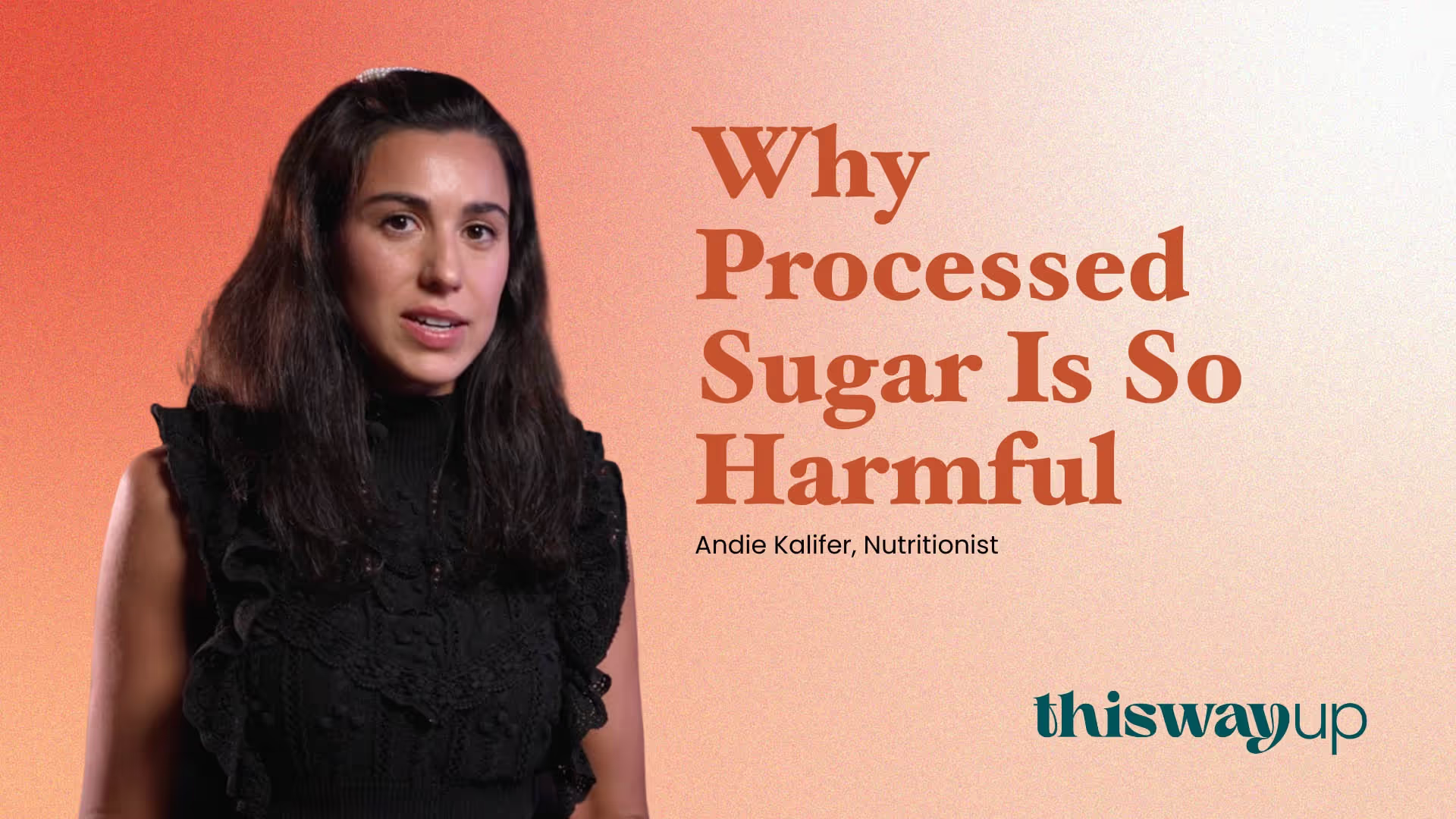

Andie Kalifer shares how low impact movement can ease symptoms of anxiety and depression by calming the nervous system and boosting mood.
Does exercise help anxiety? Research says yes, and you don't need an intense workout to start: low-impact movement like yoga, paired with breathwork and meditation, can help your body shift out of fight-or-flight and back into "rest and digest." In this short video, holistic nutritionist Andie Kalifer explains why so many of us get stuck in overdrive and why low-impact movement is her go-to for mental health.
Key takeaways
- Fight-or-flight is your sympathetic nervous system. It is built for short bursts of danger, but many people stay stuck in it day after day.
- The opposite state is the parasympathetic nervous system, your "rest and digest" mode, where the body can unwind.
- Andie recommends low-impact movement for mental health, especially if you live or work in an intense environment.
- Yoga, breathwork and meditation help you "switch nervous systems," and she suggests activating that calm on a daily basis, not just when things fall apart.
What Andie Kalifer says
Andie starts with something most of us already know: moving your body is part of feeling good. Her twist is the type of movement. She always recommends low-impact movement and exercise for mental health, "especially for individuals that are living or working in an intense atmosphere," when life has you stuck in overdrive.
She explains that stress and anxiety often keep people in the sympathetic nervous system, "which is known as our fight-or-flight mode." That mode exists for a reason. It was built for running from a tiger, and "we need it for acute situations." The problem, she says, is that "a lot of us are stuck in this fight or flight," and in that state the body's focus is getting out of danger, not digesting food, processing hormones or supporting fertility.
The fix she describes is practice, not a single workout. Yoga, breathwork and meditation activate the parasympathetic nervous system, your "rest and digest." In her words, "on a daily basis, we have to be activating that calmness," because these practices "really help us kind of switch nervous systems and just unwind."
What kind of exercise helps anxiety?
Many kinds can help, and gentle options count. Your nervous system has two sides that work like a car's controls: the sympathetic system is the gas pedal that drives fight-or-flight, and the parasympathetic system is the brake that calms the body once danger passes. Harvard Health notes that a brisk walk shortly after you feel stressed deepens your breathing and helps relieve muscle tension, and that yoga, tai chi and qi gong combine fluid movement with deep breathing and mental focus, all of which can induce calm (Harvard Health).
Over time, regular movement also adds up. A 2023 umbrella review that pooled 97 reviews covering 1,039 trials and 128,119 participants found physical activity had medium-sized effects on depression, anxiety and psychological distress compared with usual care (Singh et al., British Journal of Sports Medicine). Higher-intensity activity was linked to bigger improvements, so a run or a dance class counts too. But on days when you are already running on empty, gentle movement is a realistic way in.
How to use movement when you feel anxious
Pick something low-effort enough that you will actually do it: ten minutes of gentle yoga, a slow walk outside, or stretching while you breathe out longer than you breathe in. Try it at a set time each day, like after work or before bed, so it becomes a habit rather than an emergency tool. For a guided start, try our 5-minute deep breathing exercises to calm your nervous system, and see how movement and gratitude work together to lift your mood.
If low mood or anxiety won't lift, talk to a doctor or therapist. If you or someone you know is in crisis, call or text 988 (US).
Video transcript
Transcript (lightly edited for reading):
Exercising is such an important part of feeling good, we all know it. For me, I always recommend low-impact movement and exercise for mental health, especially for individuals who are living or working in an intense atmosphere and are in this overdrive. We need to be relaxing, and we need to be allowing our bodies to regulate our nervous system. When individuals are stressed or anxious or dealing with mental health, oftentimes they're stuck in the sympathetic nervous system, which is known as our fight-or-flight mode. And in this fight-or-flight mode, the way we were designed, it was prepping our body to run from a tiger. So it's like, get me out of danger, and we need it for acute situations. But unfortunately, a lot of us are stuck in this fight or flight. And the contrast to that is our parasympathetic nervous system, which is our rest and digest. And so what yoga does, or specifically breathwork and meditation, it activates that parasympathetic nervous system. Because when we're in the sympathetic nervous system, why should we be able to digest our food? Why do our hormones process? Why should our fertility be healthy? Essentially, it impacts all our systems, and really the mindset in that type of nervous system is getting yourself out of danger. So on a daily basis, we have to be activating that calmness, and breathwork and meditation and yoga really help us kind of switch nervous systems and just unwind.
Common questions
What calms anxiety right away?
Slowing your breath is one of the quickest options: breathe in gently through your nose and breathe out a little longer than you breathed in, a few times in a row. Pairing it with movement, like a short walk or rolling your shoulders, can help your body get the message that you are safe.
How much exercise helps with anxiety?
There's no single magic amount. The review above found benefits across many types of physical activity, with higher intensity linked to bigger improvements, so start with what you can do most days and build from there. The longer-lasting shift Andie describes comes from practicing calm daily, not from one big workout.
Is low-impact exercise enough for mental health?
It can be a strong place to start, especially when you are stressed or worn out. Yoga, walking and stretching all count. Research suggests many kinds of physical activity help with mood and anxiety, so the best choice is the one you will keep doing.
About the expert: Andie Kalifer is a Toronto-based holistic nutritionist and certified nutritional practitioner trained at the Institute of Holistic Nutrition. Her work focuses on digestive health and stress.
Related: Small Shifts Big Calm: How Micro Moments Rebuild Our Nervous System