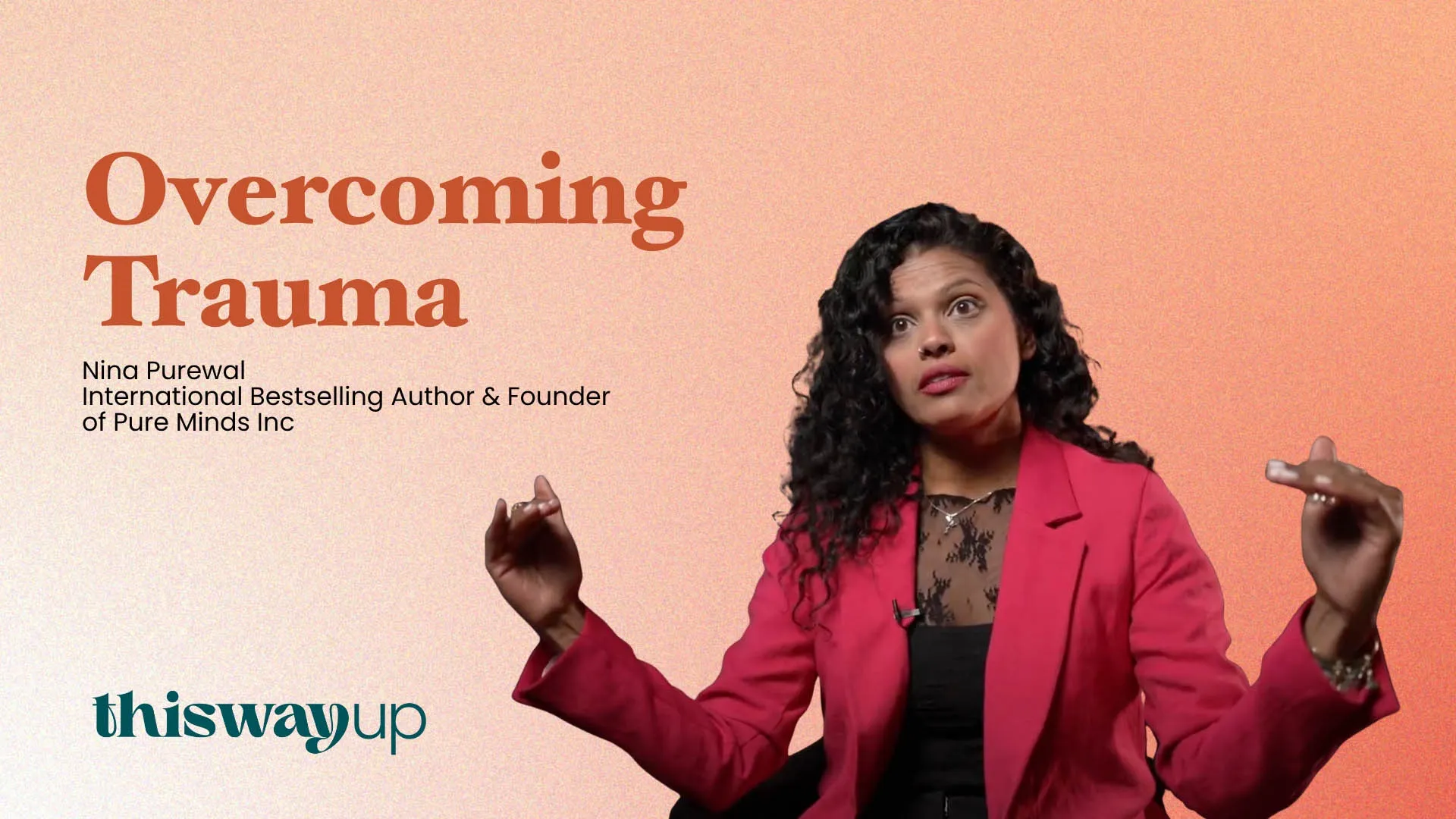

Nina Purewal explores why self-compassion is essential and how embracing kindness toward yourself transforms wellbeing.
What is self-compassion? It is treating yourself with the same kindness and understanding you would offer a close friend, especially when you are struggling, falling short or running on empty. In this video, mindfulness educator Nina Purewal explains why self-compassion matters so much for women and girls, why so many of us feel guilty practicing it, and why it starts with the way you talk to yourself, not with a spa day.
Key takeaways
- A meditation teacher once told Nina, "If you don't unconditionally love yourself, you're not going to have the capacity to unconditionally love others."
- When your cup is always empty, your love for others can come "from a place of exhaustion, of obligation, of expectation."
- Many women do everything for everyone else and serve themselves last, and when they finally do, "there's guilt associated."
- Self-love isn't only a day off or a treat. It starts with the questions "What are we saying to ourself? How are we talking to ourself?"
What Nina Purewal says
Nina admits she was skeptical at first. When her meditation teacher said you can't unconditionally love others without unconditionally loving yourself, she thought, "I unconditionally love so many people." Then it clicked: "if your cup is constantly on empty, your love is going to come from a place of exhaustion, of obligation, of expectation." Her answer is to fill your own cup first, so that love for others comes from "the cup runneth over."
She is direct about why that feels so hard. "We feel guilty loving ourselves and prioritizing ourselves," she says, and people who identify as women in particular "tend to do everything for everybody else," carrying the emotional labor and putting their own needs last. The result, in her words: "We're constantly running on empty."
She also widens what self-love means. A spa day, time with your girlfriends or a day on the golf course are "great physical things you can do," but the deeper work happens inside. It means noticing the inner critic, "that impostor in there," working through "those rooted thoughts," and "talking to ourself compassionately."
What does self-compassion actually mean?
In research, the most widely used definition comes from psychologist Kristin Neff, who describes self-compassion as having three parts: self-kindness instead of harsh self-criticism, common humanity (seeing your struggles as part of being human rather than something that isolates you), and mindfulness, which means holding painful thoughts and feelings in balanced awareness instead of getting swept up in them (Neff, Self and Identity).
That makes it different from self-esteem. It doesn't depend on being better than others or getting things right. It is the kindness you can still offer yourself on the days you fail.
Why is self-compassion important?
Because the way you treat yourself shapes how you feel. A 2012 meta-analysis that pooled 20 samples from 14 studies found a large association between higher self-compassion and fewer mental health symptoms (MacBeth and Gumley, Clinical Psychology Review). That shows a link, not proof of cause, but it fits what Nina describes.
This video focuses on the "why" and on the guilt that gets in the way. For how self-compassion helps you bounce back from stress, read our post on self-compassion as a tool for stress recovery. For how it builds resilience and optimism, watch Dr. Kimberly Schonert-Reichl in Self Compassion: A Key to Mental Health.
How to start being kinder to yourself
Start where Nina points: your inner voice, and what it says when something goes wrong. For step-by-step exercises, watch We Are Our Own Harshest Critics | How to Practice Self-Compassion. If self-criticism feels constant or heavy, a therapist can help you work through it.
Video transcript
Transcript (lightly edited for reading):
Wow. Why is self-compassion so important? That is such a phenomenal question. I had a meditation teacher say to me once, "If you don't unconditionally love yourself, you're not going to have the capacity to unconditionally love others." And I was very skeptical of this because I knew I needed self work, but I thought, I unconditionally love so many people. And suddenly it hit me that if your cup is constantly on empty, your love is going to come from a place of exhaustion, of obligation, of expectation. So you need to work to fill your cup. We as women and girls need to fill our cups. And our love should come from the cup runneth over. Why we don't do that is because we feel guilty loving ourselves and prioritizing ourselves. Especially people who identify as women, they tend to do everything for everybody else. The emotional labor and the weight of women, and then they serve themselves last. And when they do, there's guilt associated. So guess what? We're constantly running on empty. So self-compassion and self-love is at the forefront of this path. And people often think of self-love as a day at the spa, a day with my girlfriends, a day on the golf course. That's great. Those are great physical things you can do. But self-love starts here. What are we saying to ourself? How are we talking to ourself? What's going on with that impostor in there? And working through those rooted thoughts and talking to ourself compassionately, because honestly, we don't...
Common questions
Is self-love the same as self-compassion?
They overlap. Self-compassion is about how you treat yourself when you're struggling or have made a mistake: with understanding instead of blame. Self-love is a broader sense of valuing yourself.
What causes a lack of self-compassion?
It is often a learned habit. Many people grow up believing their worth depends on achievement or on taking care of everyone else. In this video, Nina points to guilt and to the pattern many women have of serving themselves last.
What are examples of self-compassion?
Telling yourself that something was hard and you did your best. Taking a break when you are exhausted instead of pushing through. Reminding yourself that everyone struggles sometimes. Speaking to yourself in a kinder voice when the inner critic gets loud.
Is self-compassion selfish?
No. As Nina explains, when your cup is empty, the care you give others comes from exhaustion and obligation. Filling your own cup first means the love you share comes from a fuller place.
About the expert: Nina Purewal is a mindfulness educator, the founder of Pure Minds and co-author of the bestseller Let That Sh*t Go.
Related: We Are Our Own Harshest Critics: How to Practice Self-Compassion