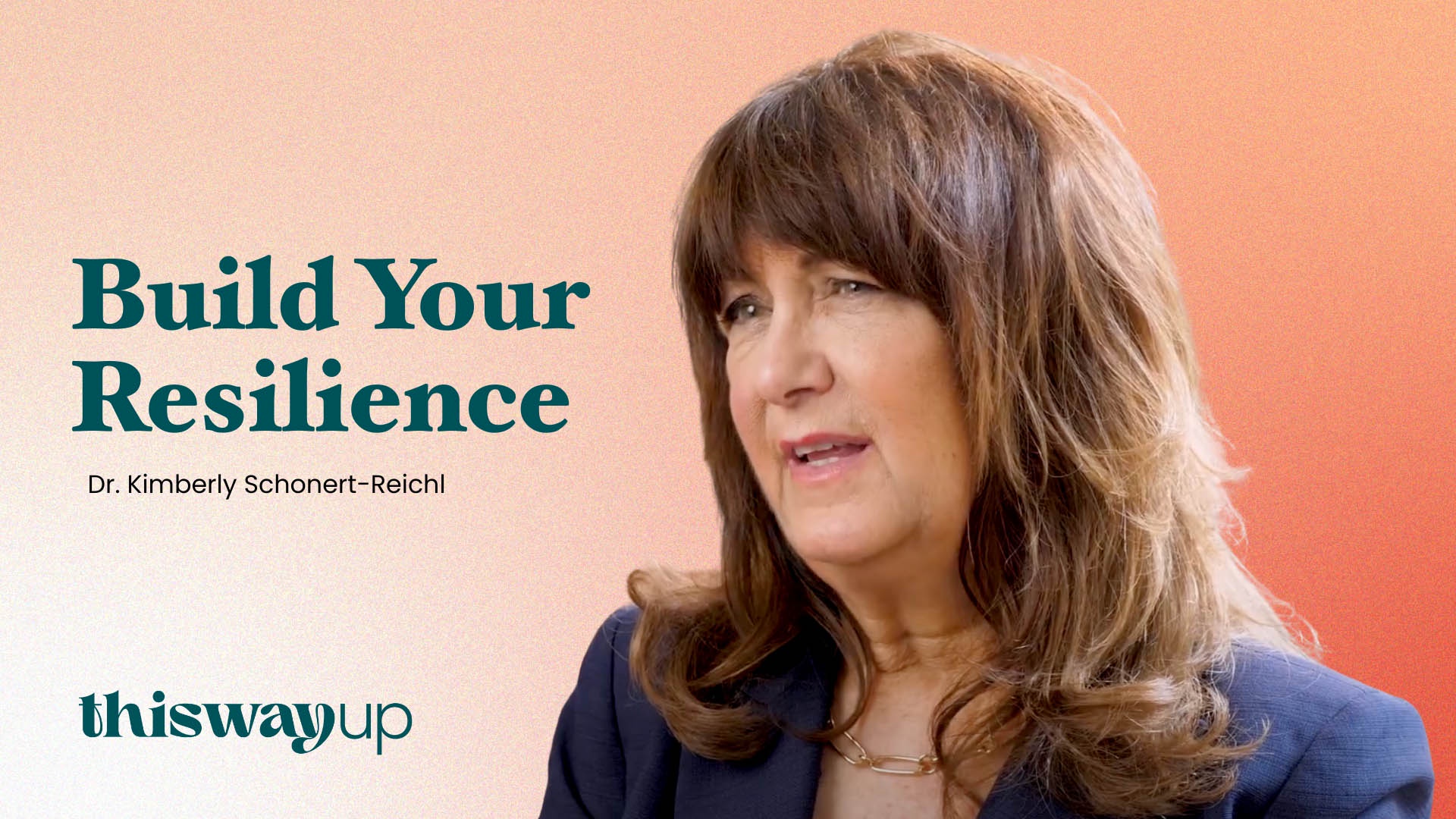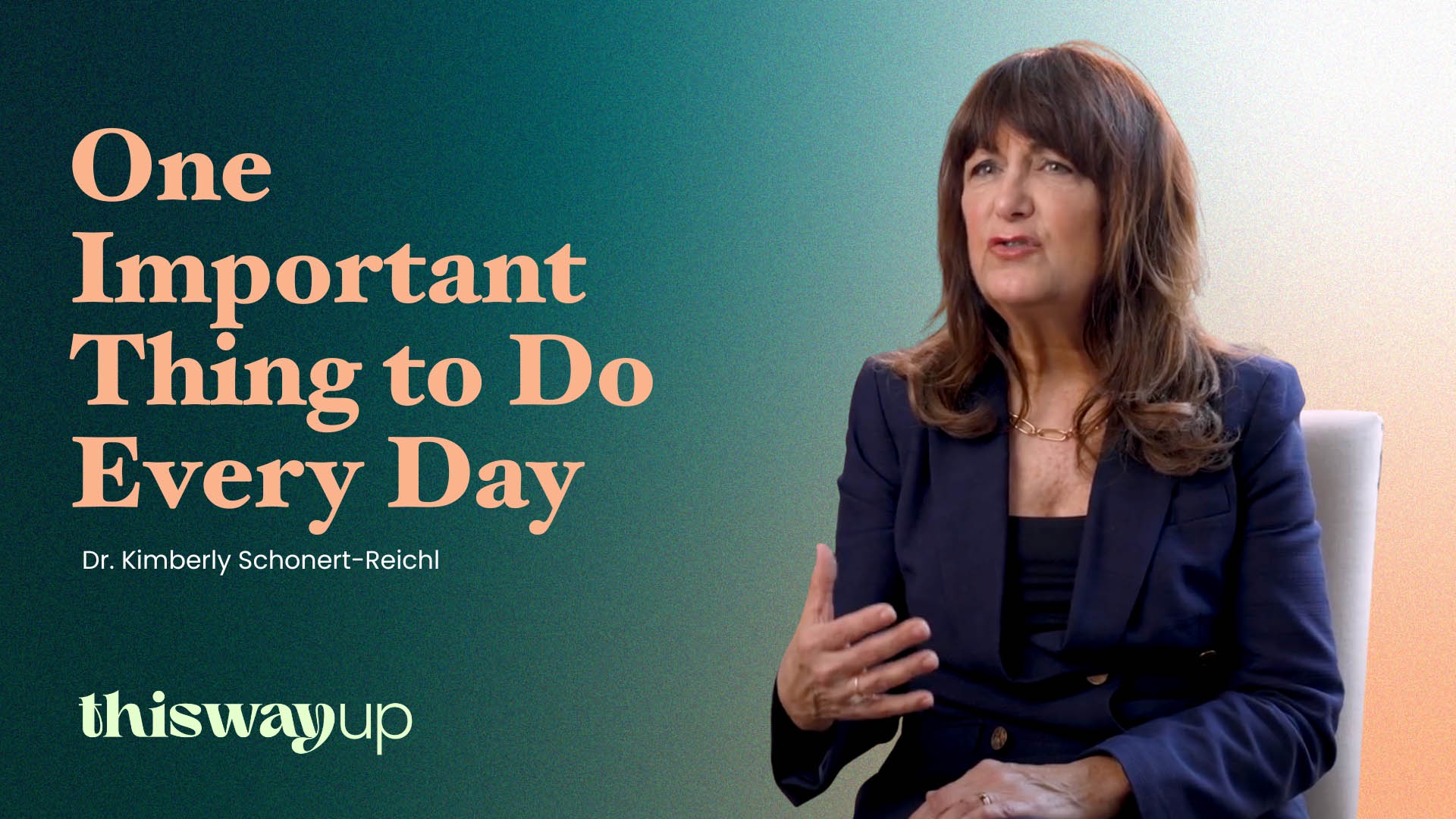

Dr. Kimberly Schonert-Reichl explores why women often struggle with self-criticism and how practicing self-compassion can bring relief.
Self-compassion exercises are small, repeatable ways to answer your inner critic the way you would answer a friend: with kindness instead of judgment. In this short video, Dr. Kimberly Schonert-Reichl, a psychology professor and researcher in social and emotional learning, explains why being kind to ourselves is so hard, especially for women and girls, and why it is a skill that grows with practice.
Key takeaways
- Most of us are harder on ourselves than on anyone else, and Dr. Schonert-Reichl sees this especially in women and girls.
- Self-compassion means "being able to be that person in your head telling yourself you're okay."
- It is not something you either have or don't. In her words, "it really takes time and practice."
What Dr. Kimberly Schonert-Reichl says
"We are the hardest on ourselves," Dr. Schonert-Reichl says. When she thinks about women and girls in particular, she calls practicing self-compassion "one of the most difficult tasks they have," and adds that it is something she has heard "over and over again."
Her definition is simple and practical: self-compassion is being that person in your head telling yourself you're okay. She is clear that this voice doesn't show up on its own. It takes time and repetition to build, which is why exercises help: they give you a way to practice it on purpose.
Why am I so hard on myself?
Harsh self-talk is common, and it is often learned. Many of us picked up the idea that criticism keeps us motivated or keeps us safe from failure. For women, there may also be a gender pattern. A meta-analysis of 71 studies and dissertations found that women, on average, reported slightly lower self-compassion than men, though the difference was small (Yarnell et al., Self and Identity). For a deeper look at where the inner critic comes from, read how self-criticism affects you and why we do it.
Self-compassion exercises you can try
The good news is that self-compassion can be learned. A meta-analysis of 27 randomized controlled trials found that self-compassion programs improved a range of outcomes compared with control groups, including self-criticism, stress, depression and anxiety (Ferrari et al., Mindfulness). These simple exercises are a place to start:
- The friend test. When you catch yourself being harsh, ask yourself what you would say to a close friend in the same situation. Then say that to yourself.
- Rewrite one sentence. Write down the exact words your inner critic used. Underneath, rewrite them in a kind, honest tone. Not I'm perfect, but I made a mistake, and I'm still okay.
- Hand on heart. Place a hand on your chest, take a slow breath and tell yourself, this is hard right now. Naming the moment can soften it.
- A short self-compassion letter. Write a few lines to yourself about something you're struggling with, as if from someone who cares about you.
Use these when stress is high, after a mistake, or at the end of a hard day. Our guide to self-compassion as a tool for stress recovery has more ideas. If harsh self-talk is constant or comes with feeling hopeless, a doctor or therapist can help. If you or someone you know is in crisis, call or text 988 (US).
Video transcript
Transcript (lightly edited for reading):
We are the hardest on ourselves, especially people who are... I think about women and girls. Again, I'll just emphasize that one of the most difficult tasks they have is practicing self-compassion. I've heard it over and over again: really being able to be that person in your head telling yourself you're okay. And again, I think it really takes time and practice to practice that self-compassion.
Common questions
How do you practice self-compassion?
Start small. Notice when your inner voice turns harsh, pause, and respond the way you would to a friend. Short, regular practice matters more than getting it perfect, which matches Dr. Schonert-Reichl's point that it takes time.
What are some self-compassion journal prompts?
Try: What am I being hard on myself about today? What would I tell a friend who felt this way? What is one thing I handled better than I'm giving myself credit for?
How do I stop being my own worst critic?
You probably won't silence the inner critic completely, and you don't need to. The goal is to stop treating it as the only voice. Each time you answer it with a kinder, more balanced thought, you strengthen the voice that tells you you're okay.
About the expert: Dr. Kimberly Schonert-Reichl is the Endowed Chair in Social and Emotional Learning and a Professor in the Department of Psychology at the University of Illinois at Chicago. She was previously a professor at the University of British Columbia and holds a PhD in Educational Psychology from the University of Iowa.