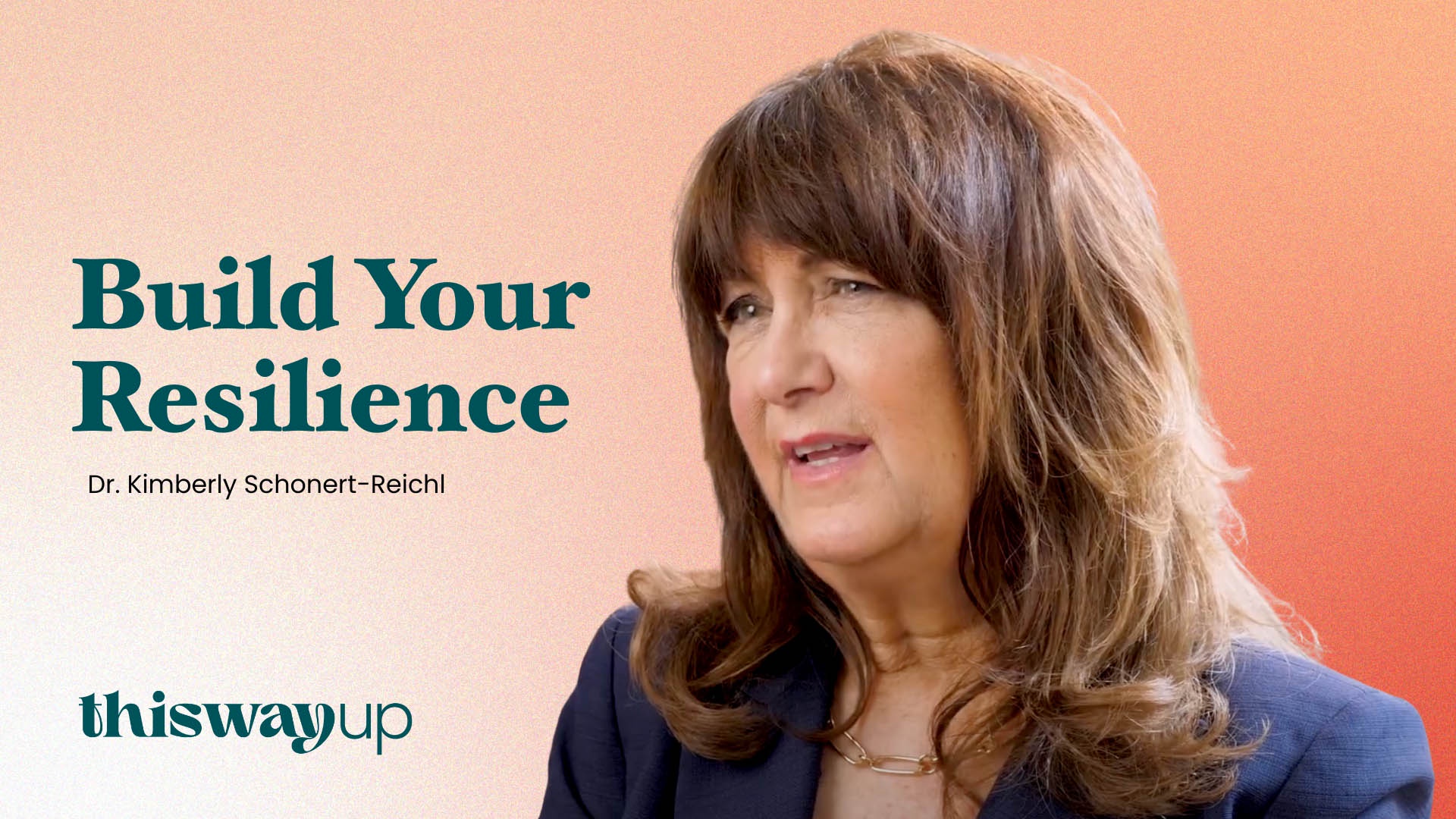

Dr. Kimberly Schonert-Reichl explains how practicing self-compassion strengthens mental health and builds resilience.
Key takeaways
- Self-compassion, practiced regularly, boosts well-being and reduces stress and anxiety.
- It helps you "see the situation in a new light" instead of staying stuck in it.
- Optimism is a key part of resilience: looking at the glass half full.
- Resilient people treat failure as information: "yes, I failed at that, but really it taught me these new things to move on to."
What Dr. Schonert-Reichl Covers
Dr. Kimberly Schonert-Reichl opens with the core claim: "Self-compassion is such a critical part of our well-being." Practiced on a regular basis, "it boosts our well-being. It reduces our stress and anxiety," and it changes perspective: "we're able to see the situation in a new light."
From there she connects self-compassion to resilience through one skill: optimism. "One key area of resilience is practicing optimism. Being able to look at the glass half full." Everyone faces daily stresses and disappointments; what sets resilient people apart, she explains, is the ability to "succeed despite adversity" by reframing what went wrong: what did this teach me about myself, about my environment, and what is another way of looking at this situation? That reframe, she says, "will help us move forward."
Video Transcript
Transcript (lightly edited for reading):
Self-compassion is such a critical part of our well-being. Being able to practice it on a regular basis, it boosts our well-being. It reduces our stress and anxiety. We're able to see the situation in a new light. One key area of resilience is practicing optimism. Being able to look at the glass half full. All of us experience stresses every day, disappointments. And really, people who are resilient, who are able to succeed despite adversity, are those who have the ability to practice optimism, to look at the glass half full, to actually say, well, yes, I failed at that, but really it taught me these new things to move on to. It taught me something about myself, taught me something about my environment, and here's another way of looking at that situation by really looking at something I learned from it, and that will help us move forward.
Common Questions
How does self-compassion help your mental health?
Practiced regularly, it boosts well-being and reduces stress and anxiety. Instead of harsh self-judgment locking you into a bad moment, self-compassion lets you step back and see the situation in a new light.
What does optimism have to do with resilience?
Dr. Schonert-Reichl calls optimism a key area of resilience. People who succeed despite adversity are the ones who can look at the glass half full, not by denying the setback, but by finding what it taught them.
How do you practice reframing a failure?
Her model is a set of questions: what did this teach me about myself? What did it teach me about my environment? What is another way of looking at this situation? Treating failure as information is what lets you move forward.
Is self-compassion the same as letting yourself off the hook?
No. In her framing it's the opposite of avoidance: you acknowledge the disappointment ("yes, I failed at that"), then use kindness and perspective to extract the lesson and keep going.
Related: Resilience vs. Perseverance: What's the Difference?