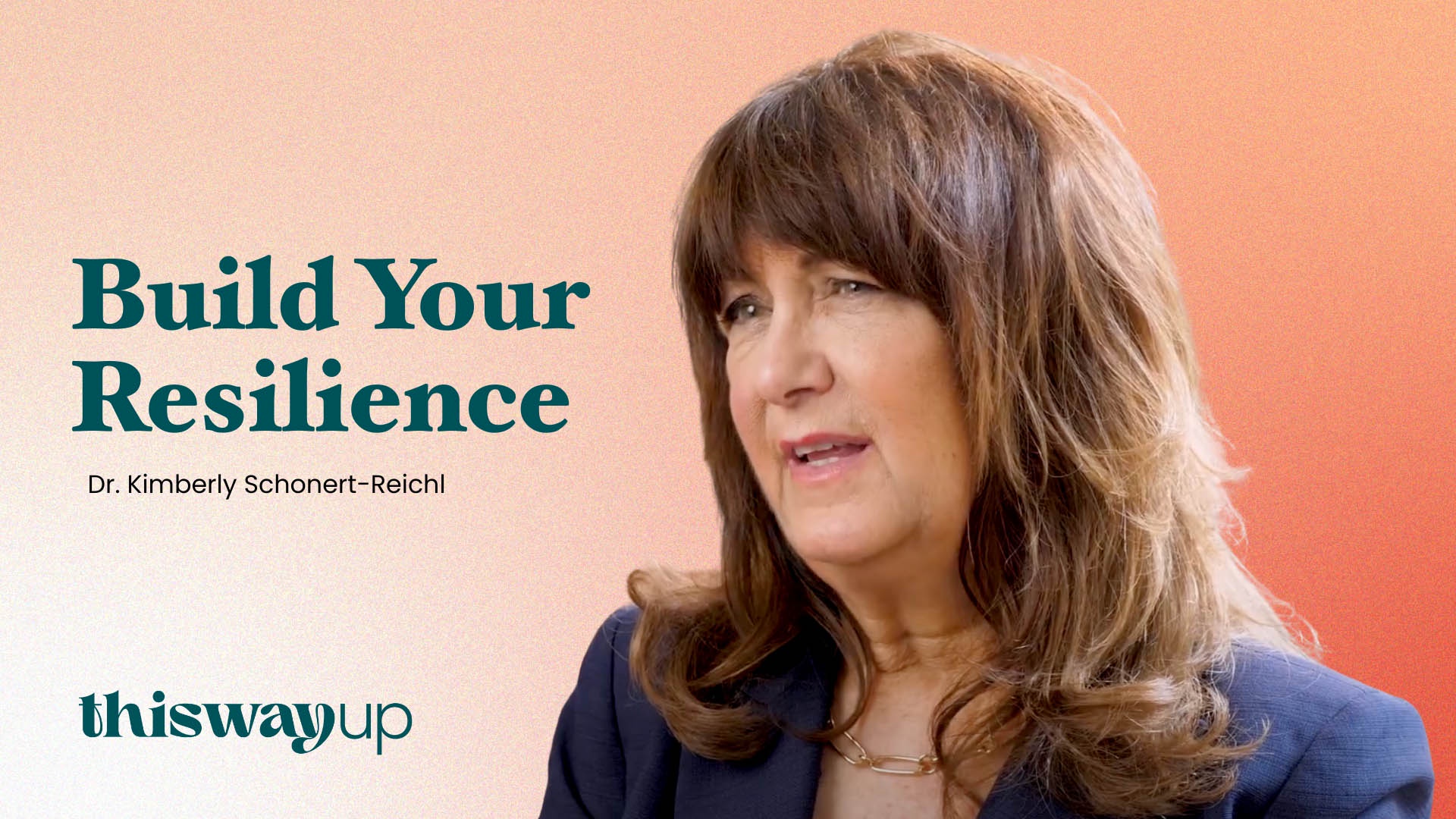

Dr. Kimberly Schonert-Reichl breaks down the key elements of gratitude and how they contribute to mental wellbeing.
Learning how to stop thinking negatively starts with knowing that your brain leans toward the negative by default, and that you can train it in a different direction. In this video, Dr. Kimberly Schonert-Reichl, a psychology professor and researcher in social and emotional learning, explains how a consistent gratitude practice works like building a muscle, slowly shifting your attention from what went wrong to what you value.
Key takeaways
- Our minds have what she calls a "default mechanism of negativity." At the end of the day, we go straight to the conversation we didn't like or the thing we shouldn't have done.
- Practicing gratitude can help switch that default toward noticing the positive.
- Once is not enough. She recommends practicing every day or every other day, because "it's like developing any muscle."
- She links gratitude to better relationships and well-being, lower depression and anxiety, and more prosocial behavior like sharing, helping and cooperating.
What Dr. Kimberly Schonert-Reichl says
Dr. Schonert-Reichl begins with the most important ingredient of gratitude: consistency. "You really have to do it every day or every other day and practice it," she says. "Can't just do it once and think you're going to get the benefits. You actually have to have a consistent practice."
The reason is how our minds are wired. She describes "the default mechanism of negativity," which she ties to survival of the species. Think about the end of a long day: the moments that replay are often "I didn't like that conversation I had" or "I shouldn't have done that." As she puts it, "We go right away to the negative."
Gratitude is her counterweight. "Practicing gratitude actually helps you switch that default mechanism to thinking of the positive," she explains, by thinking about the things in your life you are grateful for and cherish. She adds that the benefits reach beyond mood: gratitude "promotes positive relationships, promotes well-being, decreases depression, anxiety," and increases prosocial behaviors, which in turn boost our well-being too.
Why do I always think negatively?
If your mind seems to grab onto the negative, you're not doing anything wrong. Psychologists call this the negativity bias: bad experiences tend to have more impact than good ones (Baumeister et al., Review of General Psychology). For a mindfulness take on the same idea, watch Your Brain's Negativity Bias: And How to Shift It.
How to stop thinking negatively, one step at a time
You can't switch negative thoughts off, but you can change what you do with them:
- Notice and name it. When a thought spirals, label it: there's my brain going to the negative again. Naming a thought can put a little distance between you and it.
- Check the whole picture. Ask whether the thought tells the full story, or only the worst part of it.
- Balance it on purpose. Before bed, write down three specific things you are grateful for that day. This is the end-of-day habit Dr. Schonert-Reichl describes, flipped toward the positive.
- Keep it consistent. A few minutes daily or every other day matters more than a long session once in a while.
Keep your expectations realistic. A meta-analysis of 27 studies found that gratitude exercises had a small effect on symptoms of depression and anxiety (Cregg and Cheavens, Journal of Happiness Studies). That makes gratitude a helpful daily habit, not a replacement for care. To learn what gratitude does in the brain, read why gratitude is the secret to a happier brain.
If negative thoughts are constant, or come with feeling hopeless, talk with a doctor or therapist. If you or someone you know is in crisis, call or text 988 (US).
Video transcript
Transcript (lightly edited for reading):
Let me just tell you some of the key ingredients of gratitude. You really have to do it every day or every other day and practice it. It's like developing any muscle. You can't just do it once and think you're going to get the benefits. You actually have to have a consistent practice. And what we find is, because we have something called the default mechanism of negativity, we automatically, kind of survival of the species, we have to think about... At the end of the day, you think about, I didn't like that conversation I had, I shouldn't have done that kind of thing. We go right away to the negative. But practicing gratitude actually helps you switch that default mechanism to thinking of the positive: being able to think about those things in your life for which you are grateful, which you cherish in your life. We also know that practicing gratitude not only promotes positive relationships, promotes well-being, decreases depression and anxiety, it actually increases prosocial behaviors, which means sharing, helping, cooperating, those kinds of activities we know also boost our well-being.
Common questions
How do you stop automatic negative thoughts (ANTs)?
Catch the thought, name it, and ask whether it's the whole truth. Then deliberately bring to mind something that went well or that you appreciate. Over time, repeating this makes the balanced view easier to reach.
Do negative thoughts trigger negative feelings?
They often feed each other. A negative thought can bring down your mood, and a low mood makes negative thoughts feel more believable. Interrupting the thought is one way to break the loop.
How do you accept negative thoughts?
Notice the thought and name it as a thought, not a fact, then let it pass without arguing with it. Turning your attention to something you're grateful for afterward is one way to shift gears, which is the idea behind this video.
Do negative thoughts ever go away?
Not completely, and that's normal. Everyone has them. The goal is for them to pass through more quickly and have less hold on how you feel.
About the expert: Dr. Kimberly Schonert-Reichl is the Endowed Chair in Social and Emotional Learning and a Professor in the Department of Psychology at the University of Illinois at Chicago. She was previously a professor at the University of British Columbia and holds a PhD in Educational Psychology from the University of Iowa.