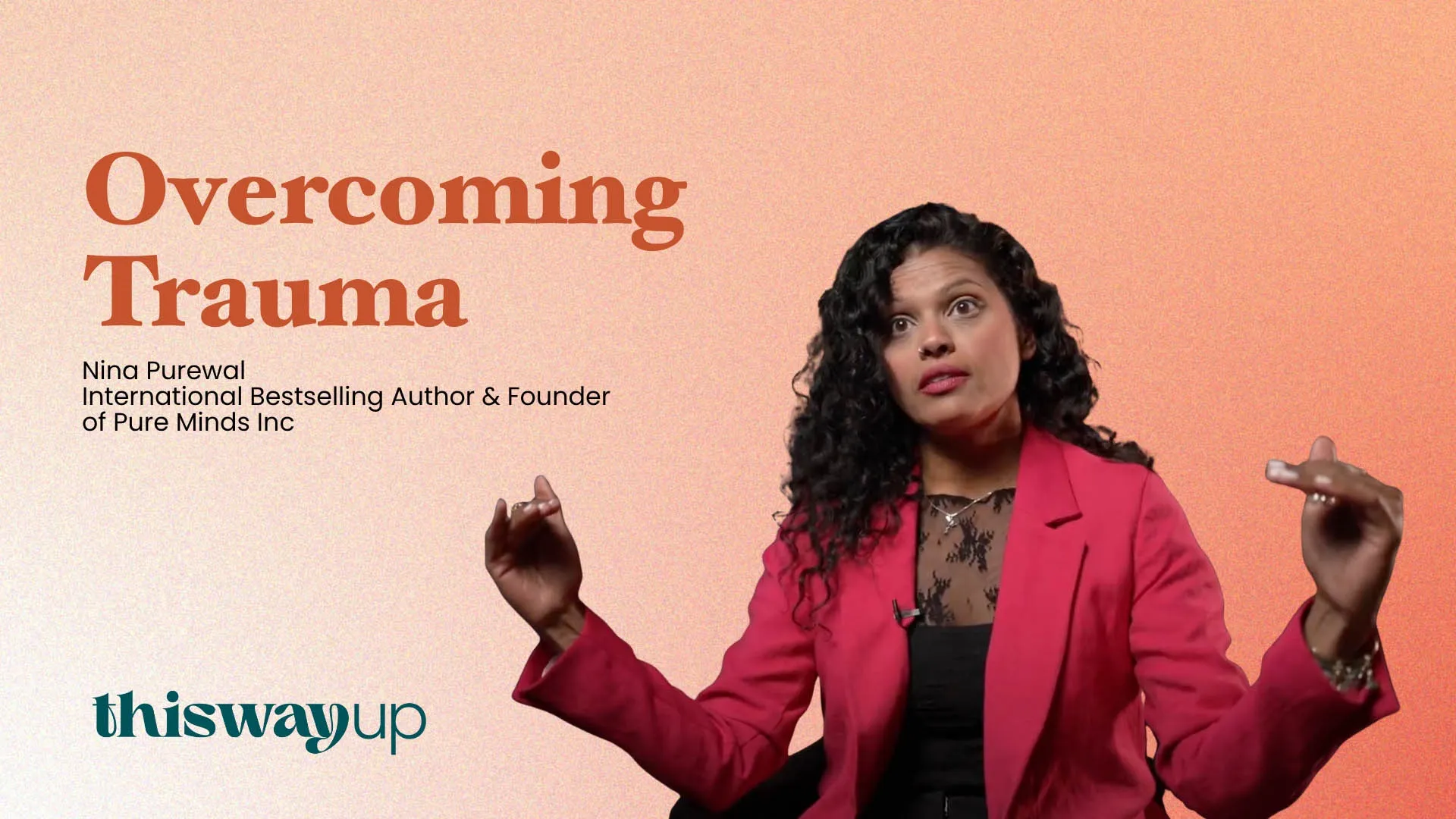

Nina Purewal explores how meditation and mindfulness can clear your mind and reduce stress for better wellbeing.
Meditation for stress works less like an off switch and more like a workout: you sit with your mind on purpose, notice where it wanders, and practice bringing it back, so stressful thoughts lose some of their grip over time. In this video, mindfulness educator Nina Purewal explains why meditation is "like going to the gym for your mind," why your thoughts will never fully stop, and two simple ways to get less attached to them.
Key takeaways
- Meditation is training: you sit with your mind on purpose so you can catch it and bring it back during the day.
- Thoughts don't stop. After 18 years of meditating, Nina has never had a completely thoughtless session. What grows is the quiet in between.
- Things you've been avoiding can bubble up when you start. That's part of getting to know your mind.
- Let thoughts pass like clouds. Don't chase them, and don't resist them.
- Use "mindful triggers," like brushing your teeth or opening a door, as cues to be present.
What Nina Purewal says
Nina separates two things that often get lumped together. Meditation is the dedicated session, "going to the gym and taking the time to sit there with your mind." Mindfulness is what you carry into the rest of the day: "catching your mind and bringing it back and having a mindful moment."
She also answers the objection she hears most. People tell her, "Nina, I can't meditate," because "my thoughts don't stop." Her reply: "that is the job of the chatty mind." Expecting no thoughts at all "is unrealistic." What changes with practice is your relationship to them. A thought might still surface, "but you're not so attached to it. You're not so triggered by it. It doesn't have a ripple effect to the rest of your day."
She offers two tools for building that distance. First, picture yourself as "the ever present sky," with each thought floating by in a cloud: "Just let it come and let it go." Second, give your mind a name. She tells clients "to treat your mind like a child and even give it a name because then again, it creates some distance." When an old worry pops up, you can answer, "No, we're not doing that today, Johnny."
Does meditation help with stress?
It can. A large review in JAMA Internal Medicine pooled 47 randomized trials with 3,515 participants and concluded that meditation programs can bring small to moderate reductions in the negative sides of psychological stress, with the clearest evidence for easing anxiety and depression (Goyal et al., JAMA Internal Medicine). The same review found no evidence that meditation worked better than other active treatments, such as medication or exercise. Think of it as one useful tool for stress, not a replacement for care.
Why can't I stop thinking when I meditate?
Because a wandering mind is normal, not a sign you're doing it wrong. Researchers who used a smartphone app to sample people's thoughts and feelings during the day found that people were thinking about something other than what they were doing almost as often as they were focused on it, and that this mind wandering typically made them less happy (Killingsworth and Gilbert, Science). Meditation doesn't erase that habit. It trains you to notice it sooner and come back, which is the skill this video is about.
How to start meditating for stress
Start small. A few minutes of sitting with your thoughts, plus one mindful trigger a day, is a real practice. For the bigger picture on what regular practice can do, read why meditation matters for your daily mental well-being. If your stress runs in loops of the same worries, how overthinking makes anxiety and stress worse explains why. If difficult memories come up and feel like too much to handle alone, a therapist can help.
Video transcript
Transcript (lightly edited for reading):
Meditation is like going to the gym for your mind. So mindfulness is to be practiced in the everyday, catching your mind and bringing it back and having a mindful moment, so to speak. You can even have mindful triggers throughout your day. So every time you brush your teeth, you're going to be really mindful, or every time you open a door. A millisecond of an activity, you're going to be really present. So, just ways to bring your mind back. Meditation is like going to the gym and taking the time to sit there with your mind. And then you become really intimate with a chatty and observing mind. A lot of people say to me, "Nina, I can't meditate." And I say, why? "Because my thoughts don't stop." Well, that is the job of the chatty mind. Your thoughts will really never stop. I've been meditating for 18 years and I've never had a meditation where it's been completely thoughtless. There are more moments of quiet and silence and zen, if you will, in between thoughts, but to expect there to be absolutely no thoughts is unrealistic. And the great thing about the thoughts coming in is you start to get intimate with what you're thinking about. Sometimes when people start meditation, it can be a bit intimidating, because the stuff that we're avoiding, that we're on autopilot, that we're maybe repressing or not looking at, starts to bubble up, and you don't even realize the depth of what is bothering you in the day-to-day and how it surfaces and how it manifests. So meditation gets you really intimate with what is going on in here, and again gives you the technique to rein the mind in. And there are so many great tools. For example, you can picture every thought go by like a cloud. You're the ever present sky, and each thought is kind of in a cloud bubble, just floating away. We don't need to do anything with it. We don't want to resist it either. Just let it come and let it go. And you can get to a point where you can see the thoughts and you can go, "Oh, that's really interesting. Okay." And not be so attached. So what starts to happen is you might still have the thought. It might still surface, but you're not so attached to it. You're not so triggered by it. It doesn't have a ripple effect to the rest of your day. You can go, "Oh, okay. That's interesting. No, we're not going to do that today." I tell a lot of my clients to treat your mind like a child and even give it a name, because then, again, it creates some distance. So Johnny pops up and starts talking about something from 20 years ago that you've resolved in therapy. No, we're not doing that today, Johnny. I'm hosting dinner tonight. I've got a big day. So, again, gaining power over what's going on in here.
Common questions
What are some ways to manage stress and anxiety?
Small habits you can repeat: a short daily meditation, slow breathing, movement, enough sleep, time with people you trust and limits on screens. If stress or anxiety is affecting your daily life, talk to a doctor or therapist.
How can I manage stress in the workplace?
Build tiny resets into the day. Use a mindful trigger, like opening a door or sitting down for a meeting, as a cue to take one slow breath. When a work worry keeps replaying, notice it and decide it can wait.
Is it normal for difficult feelings to come up when I meditate?
Yes. Nina notes that when people start, what they've been avoiding or repressing can bubble up. Go gently, keep sessions short, and reach out to a therapist if it feels overwhelming.
About the expert: Nina Purewal is a mindfulness educator, the founder of Pure Minds and co-author of the bestseller Let That Sh*t Go.