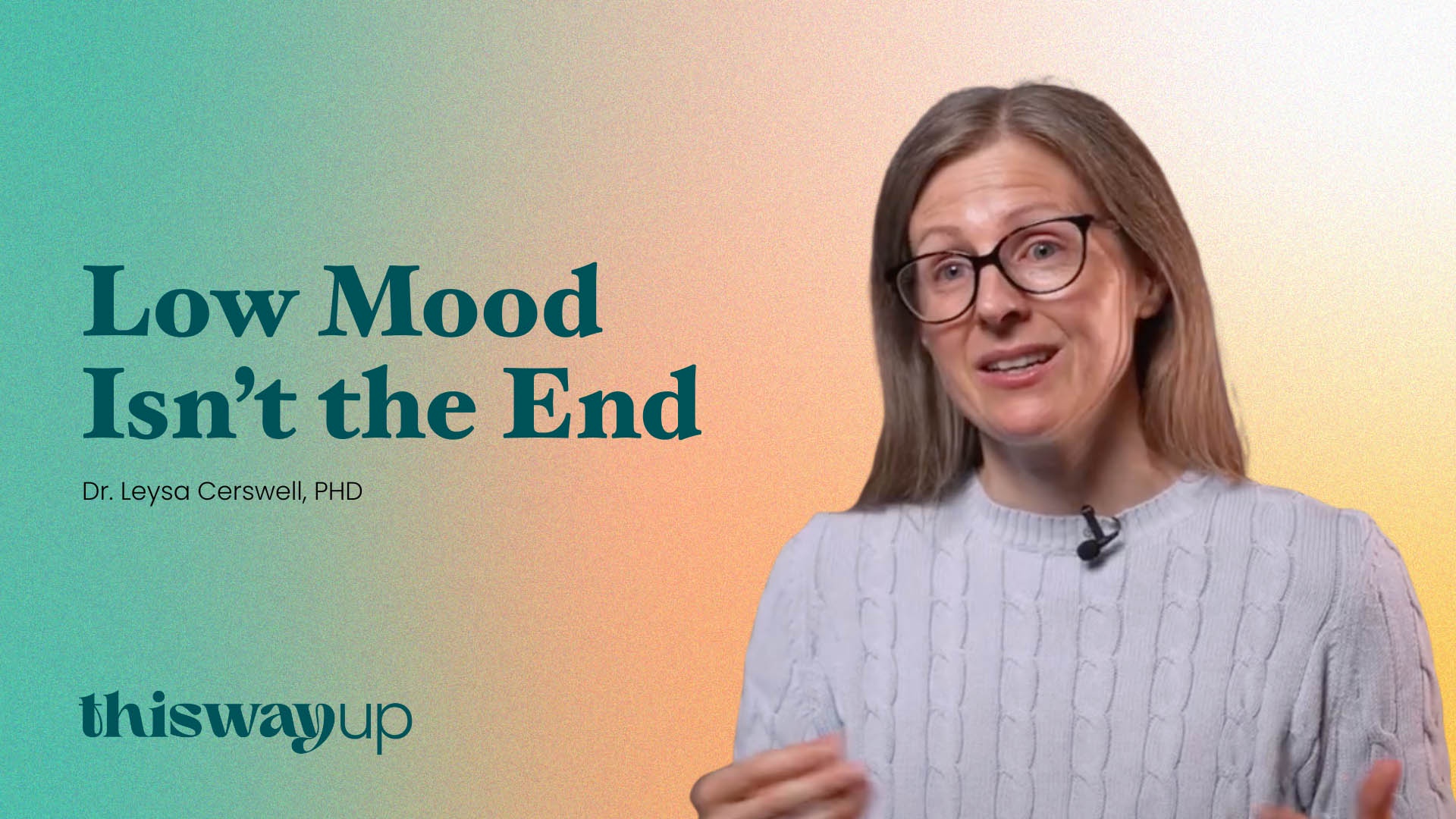

Hear a powerful sister’s story of courage and support as Dr. Leysa Cerswell shares her insights on the journey through anorexia and the hope they found together.
Knowing how to support someone with anorexia starts with patience, learning, and encouraging professional help, while also making sure the person feels loved rather than judged. In this personal video, Dr. Leysa Cerswell, who holds a doctorate in clinical psychology, shares how her family supported her sister through an eating disorder decades ago, and the lessons about self-compassion and courage she still carries today.
Key takeaways
- Eating disorders can be a way of coping. Dr. Cerswell describes how her sister managed difficulty in her life "by controlling her eating."
- Families often have to learn as they go. Hers did their best to "learn as much as we can" and navigate the mental health system that existed at the time.
- Self-compassion matters. "You could give so much love out to others in the world, but it's going to be very difficult if you can't bring that love inwards."
- Asking for help takes courage. Being willing to ask for and accept help was, in her words, "one of the most inspiring things that I've ever witnessed."
What Dr. Leysa Cerswell says
Dr. Cerswell grew up with four sisters, and the mental health of women and young women has mattered to her for as long as she can remember. When one of her sisters developed an eating disorder about 30 years ago, there "wasn't a lot of awareness" and few resources. Her family did what many families still do: they supported each other, learned what they could, and sought "the best supports based on the information we knew at the time."
The biggest lesson her sister taught her was about turning kindness inward. Self-compassion, she says, is "extremely important." Life can be hard, and getting through it takes "awareness and support and resources," along with the understanding "that we're all in this together."
She is clear about where her deepest understanding came from. Despite her professional training, she says, "my best learning about mental health was through my loved ones." What moved her most was their courage and honesty: being open about what they were going through "despite how others may see them," and being willing to ask for help and accept it.
How can you support someone with anorexia?
Anorexia nervosa is a serious illness, and it can be life-threatening. The good news is that eating disorders can be treated, and with treatment, people can recover. Family plays a real role: loved ones can encourage the person to seek help and support them during treatment, and research suggests family-based treatment can improve outcomes, particularly for adolescents (NIMH).
In everyday terms, support often looks like this:
- Learn about eating disorders, as Dr. Cerswell's family did, so you can respond with understanding instead of fear.
- Talk to the person privately and calmly. Focus on how they seem to be feeling, not on food or appearance.
- Listen without judgment, and let them know you care about them as a whole person.
- Encourage them to see a doctor or mental health professional, and offer to help find one or go with them.
- Be patient. Recovery takes time, and your steady presence matters even when progress is slow.
Taking care of yourself while you help
Supporting someone you love through an eating disorder can be exhausting and frightening. As Dr. Cerswell's story shows, the whole family is learning together, and self-compassion applies to you too. Our guide to self-compassion as a tool for stress recovery is a good place to start. A therapist or a family support group can help you, too.
If you are worried about someone, a doctor or mental health professional can help you figure out the next step. If you or someone you know is in crisis, call or text 988 (US).
Video transcript
Transcript (lightly edited for reading):
The mental health of women and young women has been incredibly important to me throughout my life, as a child, as a young teenager with four sisters navigating the world. And seeing loved ones like my sister experiencing the world and navigating the world, and having difficulty in terms of ways to regulate, and how that informed her experience was through an eating disorder. And how she managed difficulty in her life is by controlling her eating. And this would have been decades ago, 30 years ago, when there wasn't a lot of awareness about this. There wasn't a lot of resources available. And doing our best as a family to support each other and to learn as much as we can, and to navigate the mental health system that existed at the time, and to seek resources and get the best supports based on the information we knew at the time. And my sister taught me so much. And one of those key lessons was how important it is to love yourself, how self-compassion is extremely important. You could give so much love out to others in the world, but it's going to be very difficult if you can't bring that love inwards. And understanding that life can be hard, and being able to navigate that with awareness and support and resources, and knowing that we're all in this together. I think as a society, we talk about how there's not enough mental health resources available, and knowing that we're all doing our best, right? As professionals, as families, as people with experience, and learning from each other. I trained as a clinical psychologist, but my best learning about mental health was through my loved ones, through their lived experience, their courage and honesty to be open and brave to talk about their experience despite how others may see them, despite how they may judge themselves. That courage to actually be open with what they're going through, to ask for help, and to be willing to accept help was one of the most inspiring things that I've ever witnessed in terms of my personal journey and seeing loved ones...
Common questions
What is the recovery rate for anorexia nervosa?
Rates vary from study to study, so it is more useful to focus on what helps. NIMH says eating disorders can be treated successfully, and that early detection and treatment are important for recovery. Recovery can take time, so if you are worried, encourage getting help sooner rather than later.
What is the most common age for anorexia to start?
Anorexia often begins in the teen years or early adulthood, according to NIMH data on age of onset (NIMH). But eating disorders can affect people of all ages, backgrounds and body types, so age alone should never rule it out.
What is the difference between anorexia and anorexia nervosa?
In everyday conversation, people usually mean the same thing. In medicine, "anorexia" on its own can simply mean a loss of appetite, which happens with many illnesses. Anorexia nervosa is the eating disorder: a serious mental illness in which a person severely restricts food, often driven by a distorted self-image.
What should I avoid saying to someone with anorexia?
Avoid comments about their body, appearance or food, even well-meant ones, and avoid blame or ultimatums. Instead, tell them you care and keep the door open to getting help together.
About the expert: Dr. Leysa Cerswell holds a doctorate in clinical psychology and is a faculty member at the Centre for Mindfulness Studies. She is a co-founder of WE Well-being and the author of The Well-Being Playbook.